|
 Quarry Marks:
(Construction Techniques)
Quarry Marks:
(Construction Techniques)
The megalithic builders employed the same method of splitting quartz, at different
locations all around the world. This is not unusual, as it is probably the best
method, and is still widely used today.
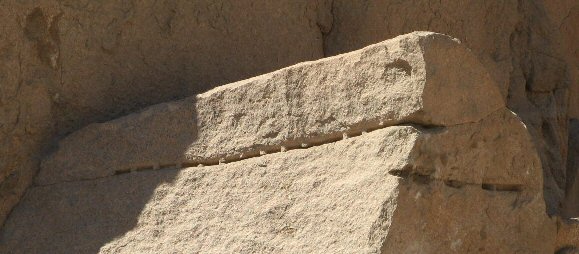
In order to accurately split hard stone such as granite, a
series of small holes are chiselled out, then filled with wood fibres
which expand when soaked in water, thereby splitting the stone.
South American Quarry-marks:
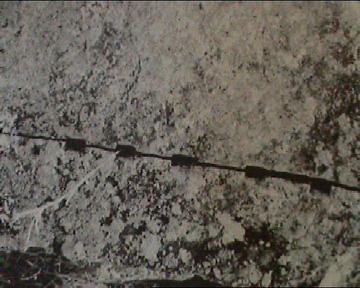
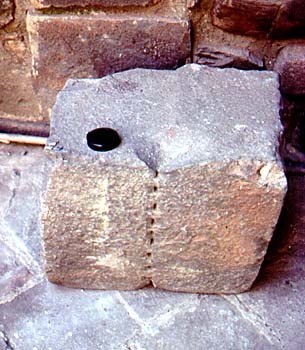
Left: Machu Pichu (1)
and Right: Cuzco.
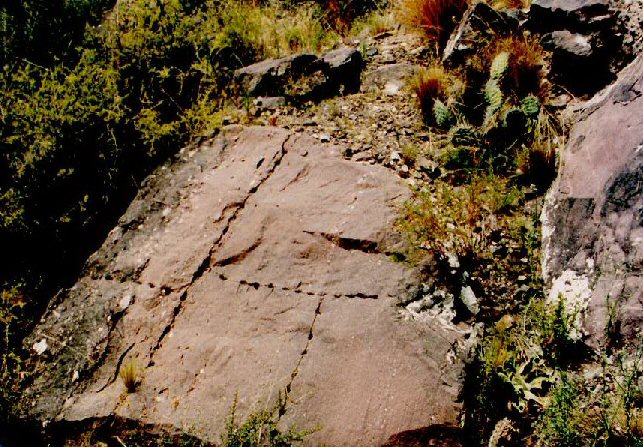
The Chilcas region, Mendoza, Argentina.
(Photo Credits:
Dario Tursarkisian)
|
Egyptian Quarry-marks:
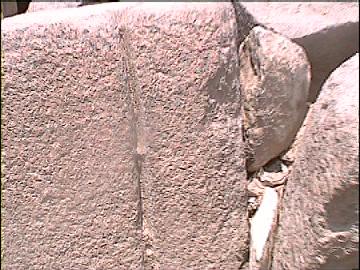 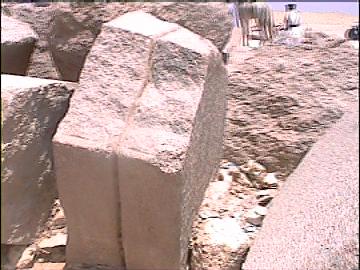
From
Egypt, Beside Menkaure's pyramid at
Ghiza...
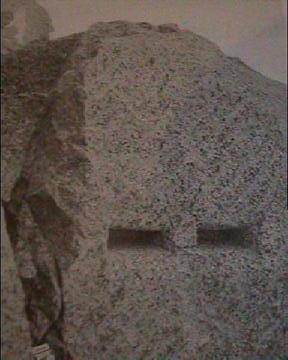
...and
at Aswan, also in Egypt.
|
European Quarry-marks:
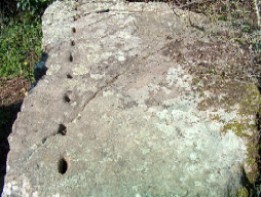
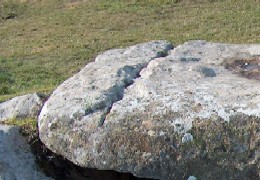
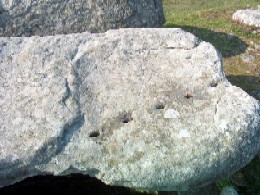
Examples from
Carnac, France (Photo's courtesy of
Ken. Tar very muchly!)
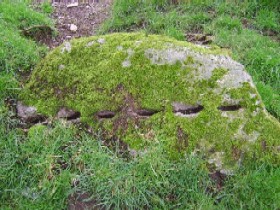
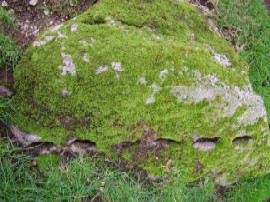
Castleruddery
in Ireland has several excellent examples. The stone above was being prepared for splitting on two sides at the
same time...
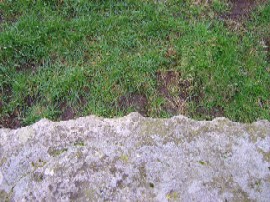
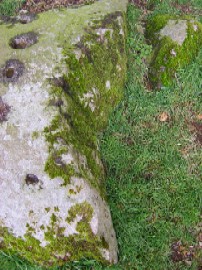
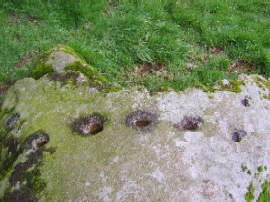
Stones were left in different stages of preparation
at this small henge-circle.
(More about
Castleruddery)
|
Portuguese Quarry-marks:
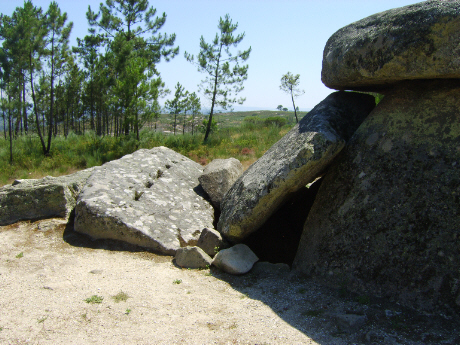
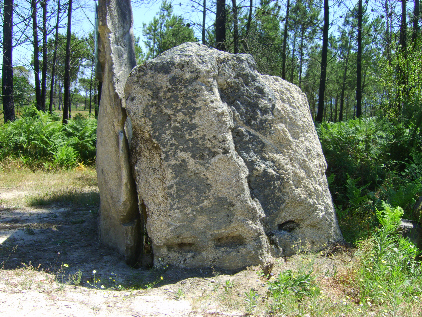
This stone on the right is still in place on a dolmen in Portugal (Anta
da Orca), and the stone behind it also shows the remnants of the
original quarry marks.
This beautiful dolmen has another stone inside which has been cut
specifically, as if it were shaped to fit another stone.. highlighting the
balance of the builders to work with natural and worked stone.
Other stones in the region of 'Orca da Lapa' have the same quarry-marks
on them, suggesting that perhaps the builders of these 'dolmens' re-used
existing stones for their constructions, as the following pictures
demonstrate.
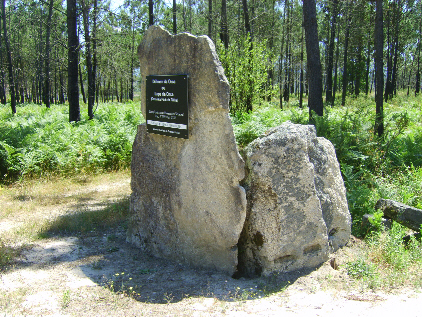
Such as this stone which was re-used for the site plaque.
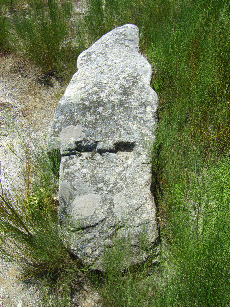
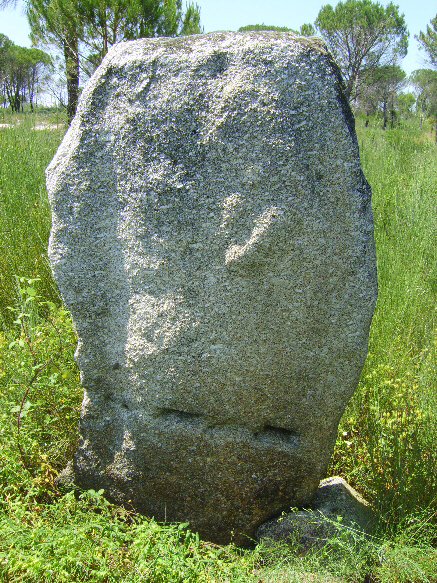
Orca da Lapa (left),
Orca do Santo (right).
|
The
'Quarry': Within sight of the Orca do Santo is this
quarry face where it is still possible to see
prehistoric cut-marks in the rocks.
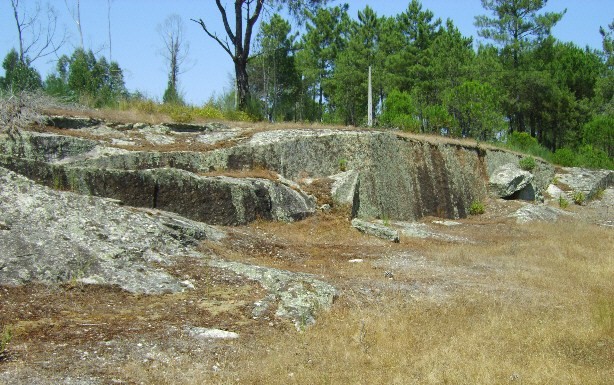
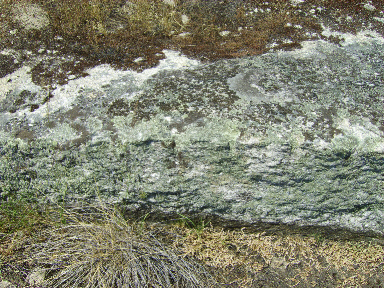
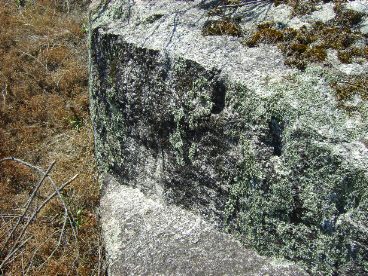
The same
quarry marks can be seen at the 'quarry' as seen on megaliths
around the Orca complex.
|
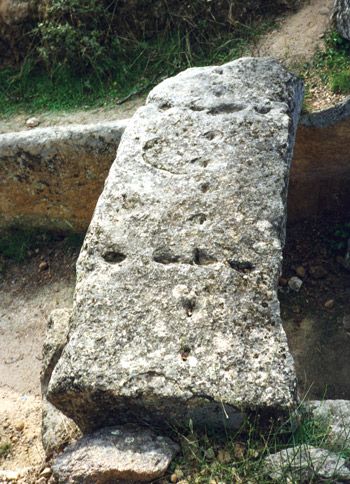
Also from Portugal: Lacara Dolmen - Passage lintel.
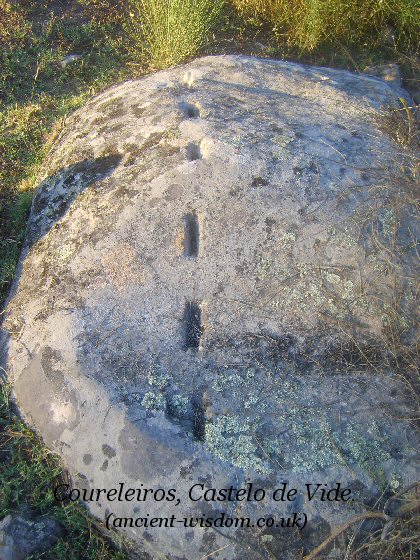
In the same field as Anta Coureleiros II and III, Castelo de Vide. ( More
about Coureleiros)
(More about
Prehistoric Portugal) |
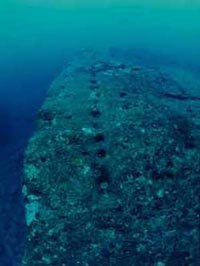 Yonaguni,
Japan. Yonaguni,
Japan.
And Finally: What must be the most remarkable example
of this particular stone-splitting technique comes from the underwater
site of Yonaguni in southernmost Japanese waters.
This particular discovery goes a long way in the case for the site
having been man-made.
(More about the Yonaguni
site)
(Other
Prehistoric Construction Techniques)
|

