|
Location:
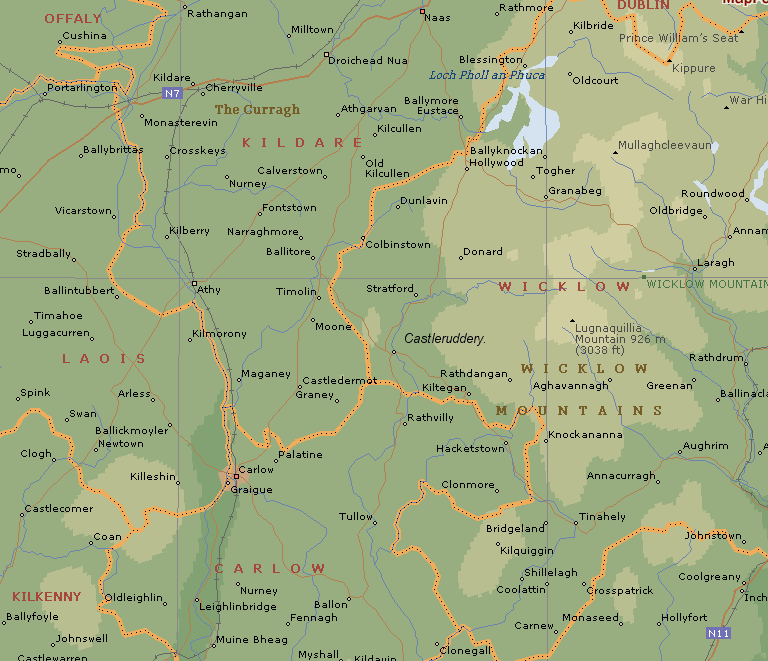
Nr Baltinglass, Co. Wicklow,
Ireland. |
Grid Reference:
52� 59' 29.93" N 6� 38' 8.61" W. |
 Castleruddery:
(Henge Circle).
Castleruddery:
(Henge Circle).
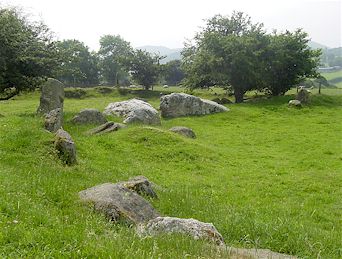
One of the prettiest
Henge-circles in Ireland.
The addition of two huge 15-ton quartz portal stones adds to the
experience of viewing this site.
Originally 40 stones, only 29 now remain, there are several smaller
stones lying next to the circle, which show the original preparatory
cut-marks of the masons.
(Map of Site:
How to get there)
('Druidical circle', 'Caisl�an'-an-Ridear' - 'Castle of the knight')
Castleruddery is a beautiful small Henge-circle (100ft, 30m diameter), with two
huge 15-ton,
white-quartz portal-stones, which appear either fallen or 'recumbent'. The
circle is the same diameter as Stonehenge III in Salisbury.
The site has a curious air to it, because of the proportionately large
number of stones for such a small circle which appear to
line
the
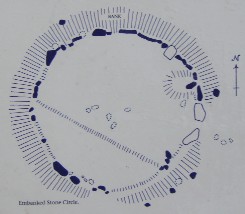
inside of an embankment. Outside of this bank there was once a ditch, and
then another earth-bank, making this site an example of a
concentric-henged,
stone circle. There are 29 from an original 40 stones remaining.
(1)
The two great 15-ton quartz 'portal-stones' stand out pearly white in
contrast to the other stones at the site. The specific selection of such
large stones suggests a function or symbolism seen at several other
megaliths.
Quarry Marks at Castleruddery.
Of particular interest at the site are the several excellent
examples of prehistoric masonry-marks at the site, which shows how stones
were prepared for splitting, providing us with a valuable source of evidence. It is interesting to
see that the Neolithic stone-masons here
used
exactly the same techniques as those found around the ancient world.
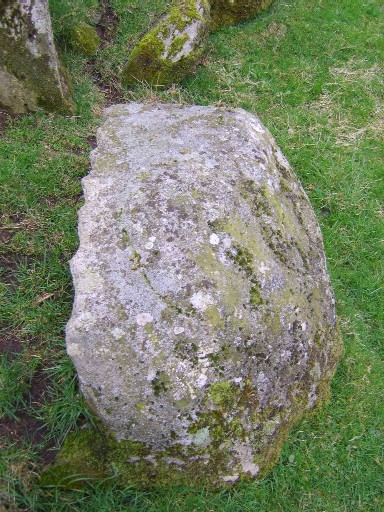
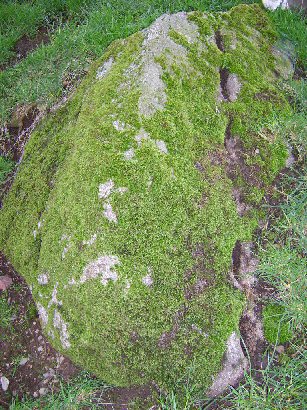
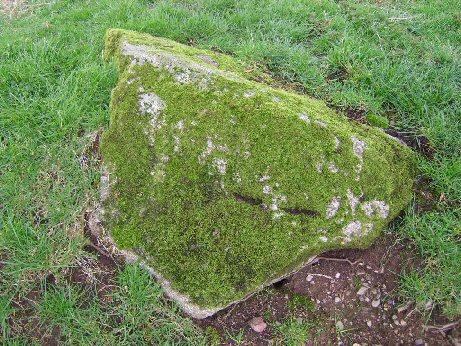
The site has several stones that
were left unfinished. The deliberately use of this technique on such
small stones suggests that they were being made for a purpose.
This means of cutting hard stone can be seen all around the
ancient world, from Europe to Egypt and even south America. This is just one
of many 'signature' construction techniques adopted by the megalithic
builders. At Castleruddery, it is possible to see several different styles and stages of
stone cutting. The several half-finished stones lying abandoned beside the
circle leave one with the impression that the site may have been used as a
stone-cutters workshop, or that it was left abandoned halfway through works.
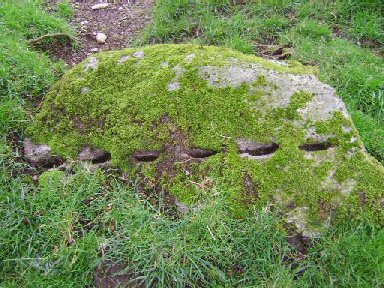 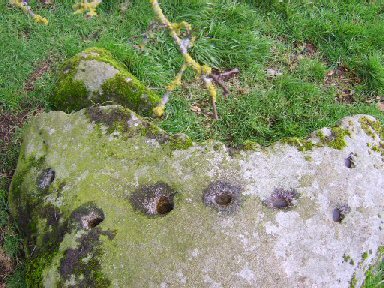
It is notable that two kinds of preparatory
split-marks can be seen here... small (unique?) circular perforations (right), and
the more traditional elongated ones (left), seen around the prehistoric
world.
The remaining stones are surprisingly small - too small for
the stone circle itself, leaving one wondering what their use might have
been. One stone even has sets on two sides as though ready to split the
stone into the size of a breeze block - when it would have been surely
easier to use a smaller stone.
(Other examples of preparatory cut-marks from around the prehistoric world).
 Chronology Chronology
The plaque at the site
suggests an age of approximately 2,500
BC, but it is likely that this estimate will be determined one day to be
older (personal opinion).
Archaeo-astronomy
The site is almost cardinally aligned, with the opening slightly south of
true East.
Gallery of Images: Castleruddery.
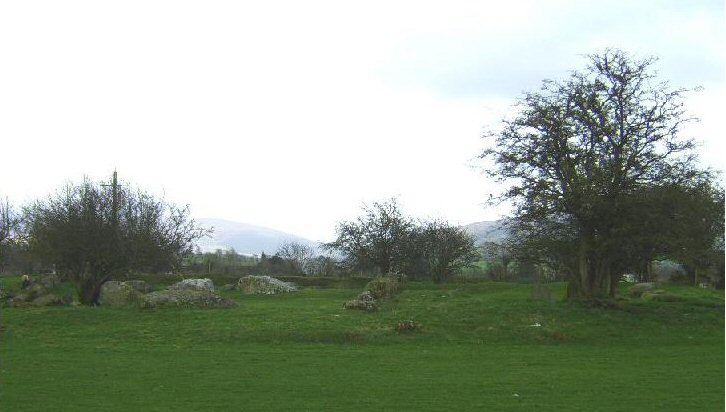
The two quartz portal-stones can be seen on the far side of the circle.
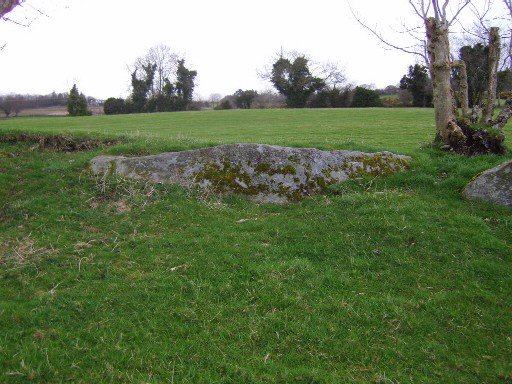
The stones were laid horizontally like kerb-stones, rather
than vertically.
(Other Henges)
(Other
Stone Circles)
(Other
Prehistoric Irish Sites)
|