|
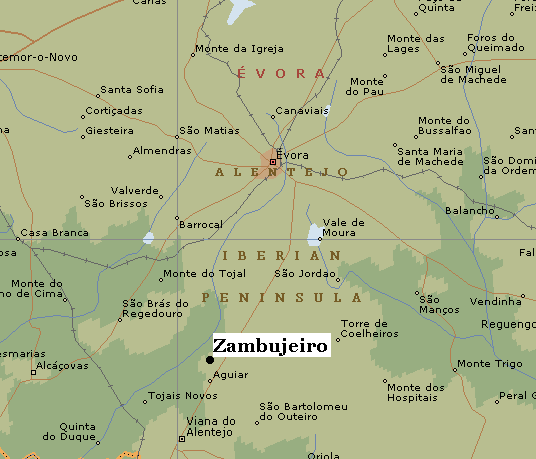
Location:
(N380), District De Leiria, Evora, Alentejo. |
Grid Reference:
38˚ 52' N, 8˚ 00 W. |
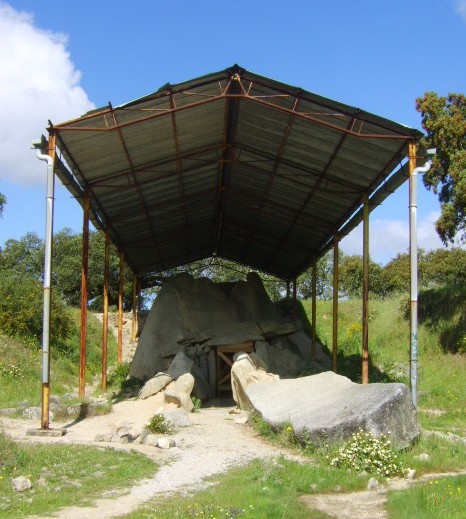
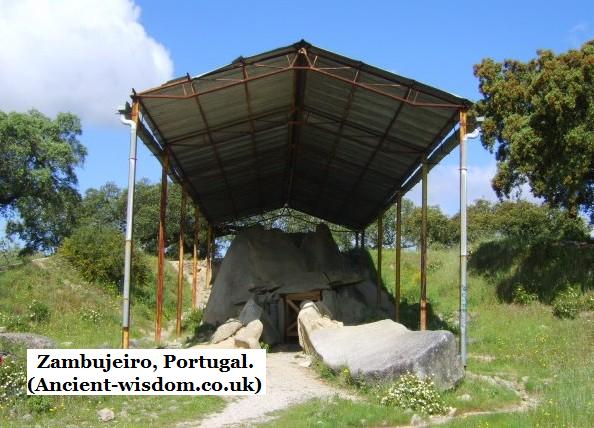
 Zambujeiro, Anta Grande:
(Passage Mound).
Zambujeiro, Anta Grande:
(Passage Mound).
The combination of such large stones inside such a large passage-mound,
being in an area of such high
concentration, makes this passage mound one of the most significant
megalithic sites in all Iberia..
Anta Grande do Zambujeiro was
declared a national monument by the Portuguese government in the
22nd de November 1971.
One of the jewels of Portugal's megalithic crown.
A must for all lovers of megaliths.
The site is free entry and is accessed by a track and then by foot for the last 100
metres.
(Click
here for map of the site)
|
Anta Grande de Zambujeiro: |
This
is easily the largest passage-mound in all of Portugal
and, apart from the Irish passage-mounds such as Newgrange, Knowth and
Dowth, is also one of the the largest in Europe.
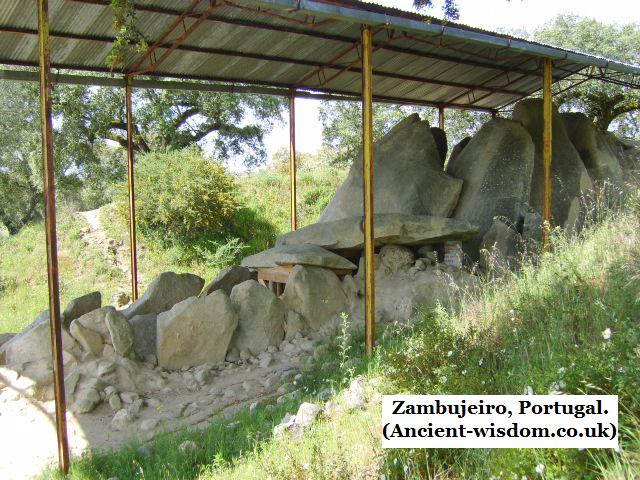
The internal
structure of the mound has been exposed through quarrying.
Although the internal design of the passage and raised
chamber conforms to the traditional shape of other passage mounds across
western Europe, Zambujeiro is the only example where the internal walls have
been fashioned from large upright stones. Elsewhere in Portugal, the same
basic design has been used for the construction of numerous 'antas',
although they were all apparently only covered over with half mounds,
leaving the upper parts protruding with the appearance of a dolmen.
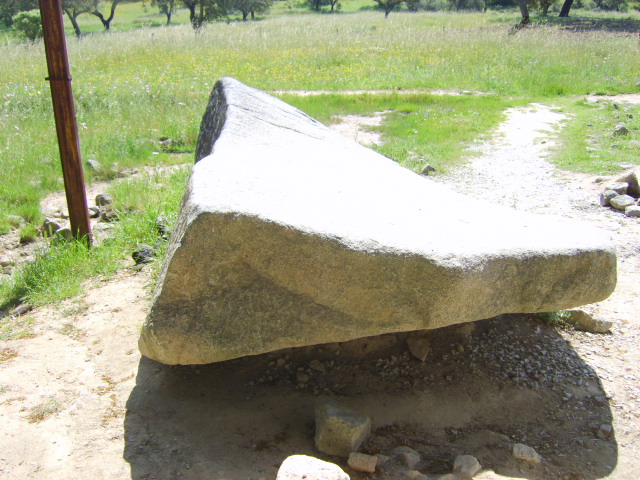
There are several large stones lying around the site which look as though
they were left in a state of semi-readiness. One of the most impressive
discarded stones is the 'leaf' shaped stone in front of the monument on the
right-hand side of the entrance (see below). This stone has the appearance
of having been left half finished although it is also just
as likely that we see it today as it was originally intended.
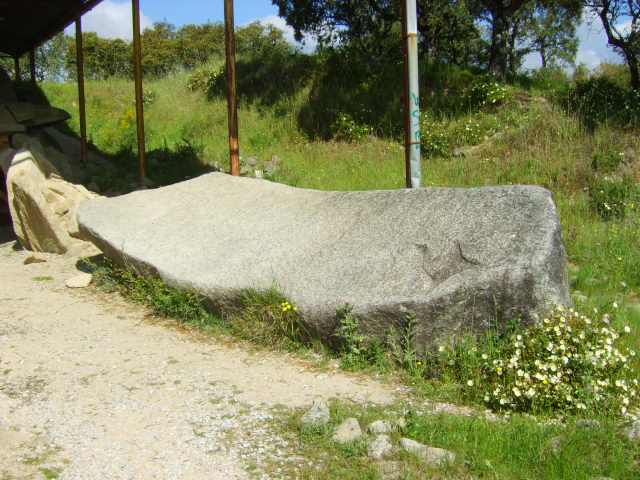
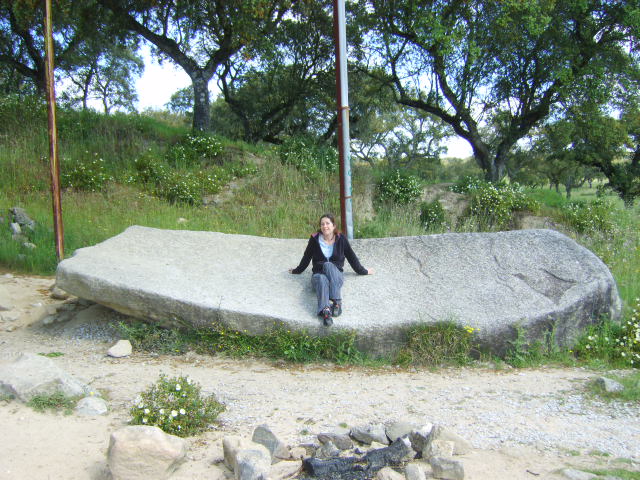
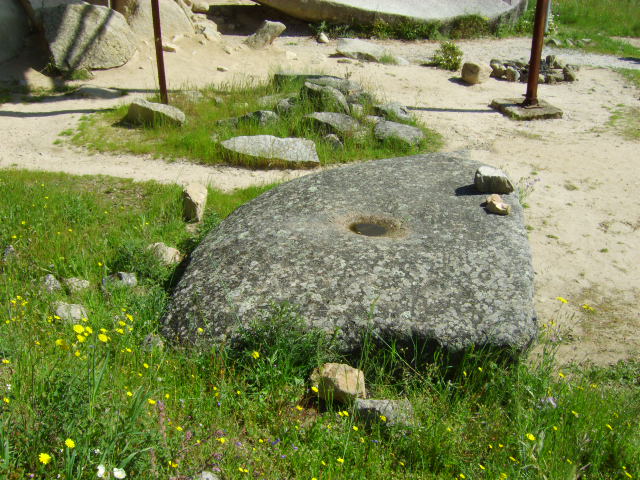
On the left hand side of the entrance (see left) lies a large (1.5m x 2m),
flat topped stone with a large, single cup-mark in the centre of it. The
position of these two prominent stones on either side of the entrance gives
the site a sense of ceremony, before even bearing witness to the eight
giants that form the walls of the inside chamber.
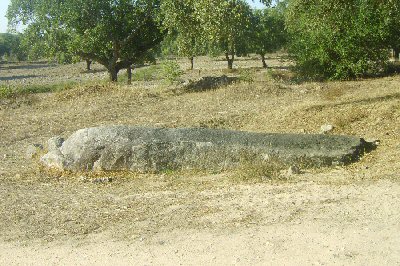
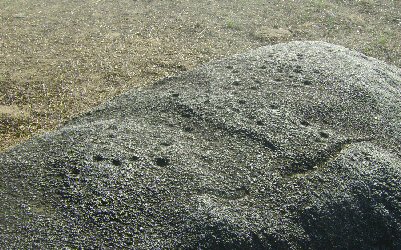
A little further to the left of the large cup-marked stone
lies an even larger stone with numerous smaller cup-marks on its upper
surface (suggesting, as with the other cup-marked stone, that they have
always been in the positions we see them today).
The Mound:
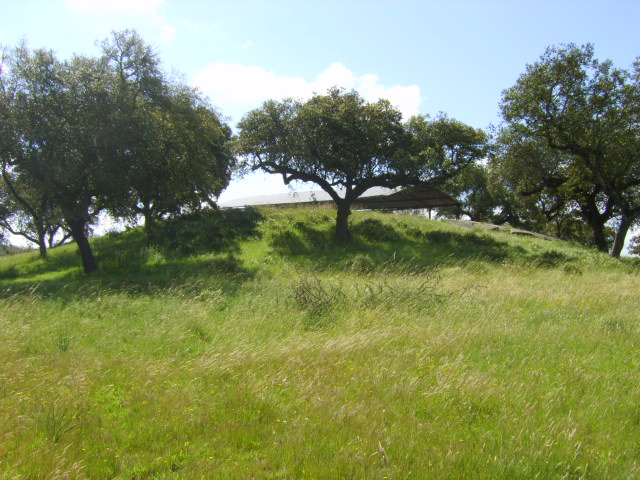
The mound itself is 50m in diameter and around 7-8m high.
It is
composed of rubble packing-stones of varying sizes and has been severely
excavated in the past. The round shape of the mound
is easily defined, except at the front which has lost all vestige of any
original appearance. If the two large stones to the
left and right of the passage entry were originally outside the structure, then we
can conclude that it was never completely round at the front as they lie
within the perimeter of the diameter.
The Passage:
The passage is composed of several stones on either side, which appear to
have been shaped along their tops in readiness to receive other stones. There are no visible
markings on any of the stones. The floor of the passage has a rock feature,
which appears to have been intentionally carved, although it is possible
that this too is still in its original form. The passage has a slight bend
along its length, a feature discussed below.
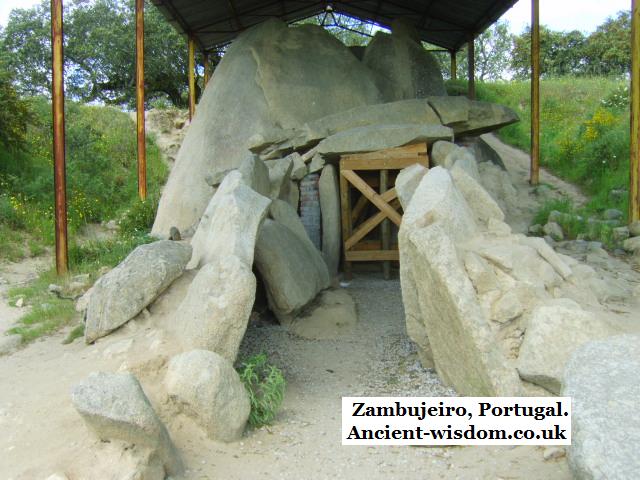
The stone pillar inside does not appear structural and is similar to the one
found in
Bryn Celli Ddu, in Wales.
The Chamber:
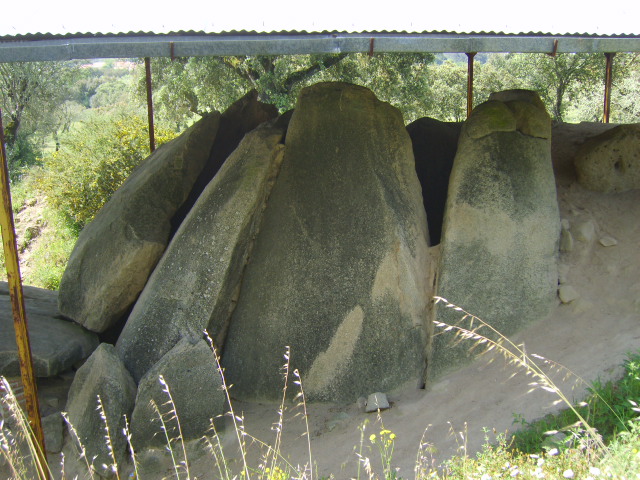
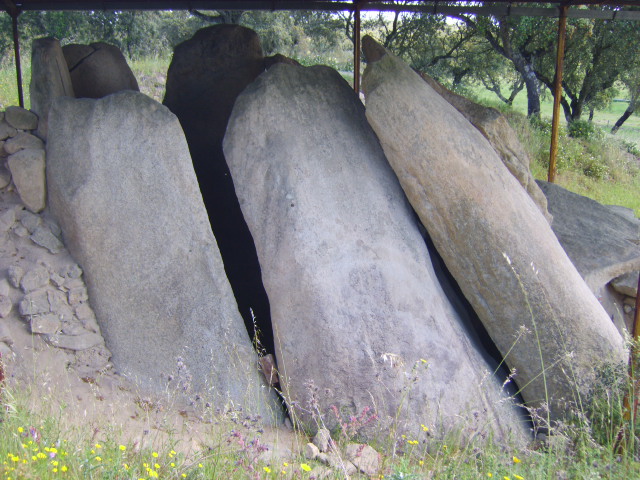
The chamber is huge and cathedral-like from inside, and would have been
more spectacular with the capstone in place. It is composed of 8 mauled
granite stones, all 6-8m in
height (above ground), with the largest at the rear almost 4m wide. There is
no sign of carvings on any of them (except modern graffiti), and they all lean inwards,
pressing against each other and sharing the load of the surrounding mound. A
feature similar to many Portuguese passage mounds and dolmens.
Cope
(1) mentions that excavators found 'callis
beads, decorated schist plaques, flint and stone tools, pottery and a
stone-axe', with mention of any skeletons notoriously absent..
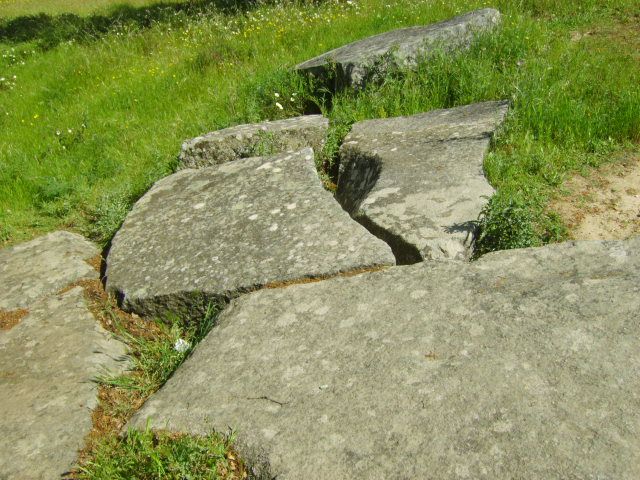
The Cap-stone:
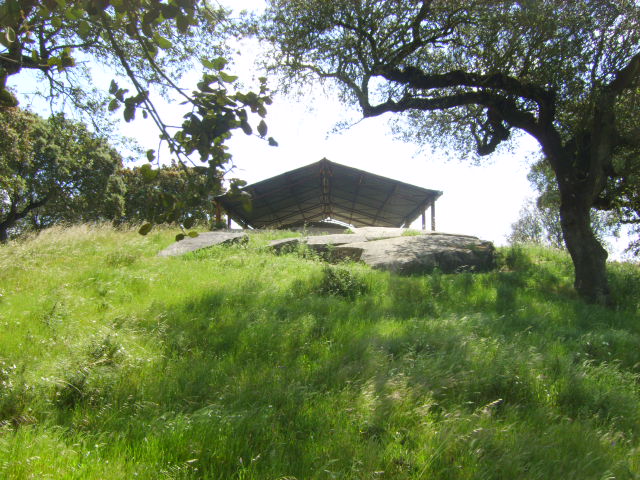
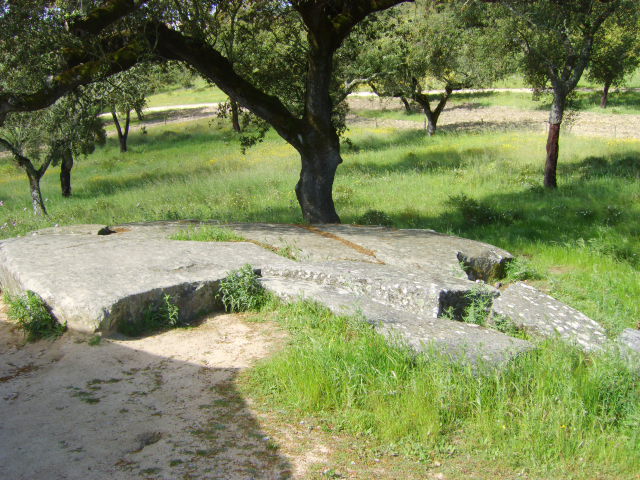
The cap-stone to the chamber is around a half metre thick and lies on the
top of the mound, behind the main chamber. It is broken into several pieces,
and in its original state would have weighed several tons. It has the
appearance of having either been slid off or having almost made it into
place, before being broken (struck by lightning?).
Astronomy:
The passage has a slight curve along its
length, a feature which is more easily discernable at Newgrange, where it
was used to restrict the entry of sunlight to the inner chamber. There are
two standing stones in the passage which may have been originally part of
the support, but are suspiciously placed as if to control the entry of
sunlight to the chamber. The whole mound faces 20�
off true East (a feature noticeable at the other two passage mounds (Anta
de San Gens, and
Anta do Tapadao) in the
Alentejo, both of which also show the same gigantic stone work, although neither
on the scale of Zambujeiro.

The placement of Zambujeiro itself has been suggested to
have been deliberate, being placed in alignment between the Almendres and
Xarez 'cromeleques. The orientation of Zambujeiro therefore comes as no
surprise, simultaneously facing the direction of the Xarez monument and the
spring full moon (110�).
(Click here more about Xarez)
Photo Gallery...
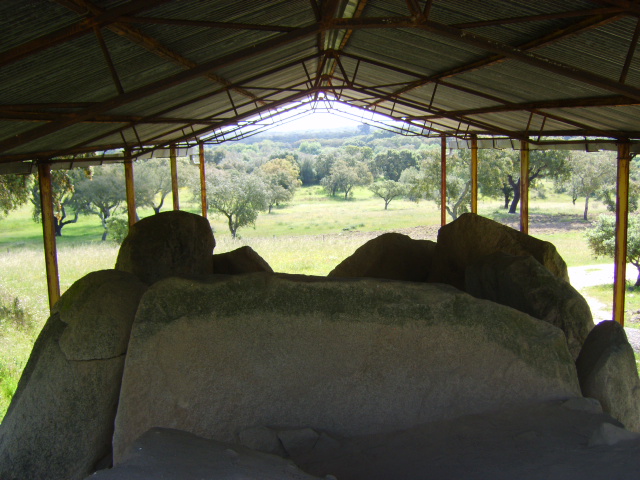
View from the top. This site is an absolute must for all
lovers of megaliths...
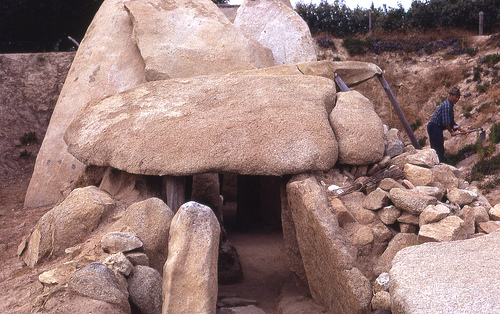
An image from 1971. The year of restoration. The site has
deteriorated
considerably since then.
(More about Passage-Mounds)
(List of Prehistoric Portuguese sites)
(Portugal Homepage)
|