|
 Faces in Stone:
(Anthropomorphic rocks, Simulacrum).
Faces in Stone:
(Anthropomorphic rocks, Simulacrum).
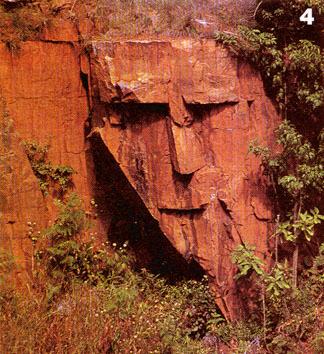
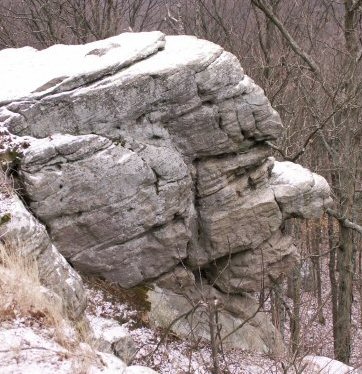
 Recognising faces in nature, or 'Simulacrum', is
something that can be traced back through prehistory.
Recognising faces in nature, or 'Simulacrum', is
something that can be traced back through prehistory.
It is likely that these images, when viewed through prehistoric eyes
would have been perceived as an expression of the living-spirit of the
earth.
The discovery of simulacrum at several of the
megaliths supports the idea that such stones were considered to be
endowed with special qualities, and possibly explains the
specific selection and transport of certain stones over large
distances in prehistory.
Quick
Links:
|
The Soul of the Stone: Article. |
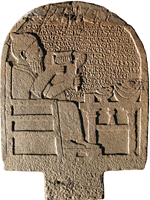 An
eighth-century B.C. funerary stele unearthed this summer (2008), at the site
of Zincirli in southeastern Turkey, known in ancient times as Sam'al, is
providing rare insight into Iron Age concepts of the soul. Archaeologists
from the University of Chicago's Oriental Institute recently announced a
translation of the monument's 13-line inscription, which is emblazoned
beside a depiction of the deceased, a high official named Kuttamuwa. An
eighth-century B.C. funerary stele unearthed this summer (2008), at the site
of Zincirli in southeastern Turkey, known in ancient times as Sam'al, is
providing rare insight into Iron Age concepts of the soul. Archaeologists
from the University of Chicago's Oriental Institute recently announced a
translation of the monument's 13-line inscription, which is emblazoned
beside a depiction of the deceased, a high official named Kuttamuwa.
Read right to left, top
to bottom, the text states that Kuttamuwa fashioned the stele during his
lifetime, and that at its inauguration in the mortuary chapel offerings were
made to various gods, including the storm-god Hadad and the sun-god Shamash.
But the part that is causing the greatest stir is a line explaining that one
of the offerings was "a ram for my soul that is in this stele." which
clearly suggests that the stone serves as a vessel for his soul.
(Click here
for full article)
Stones and Bones.
The connection between stone and bone
is supported by Greek mythology where, following the great flood,
Deucalion is offered a wish by Zeus, to which he asked for more people
so Zeus instructed him to throw stones over his shoulder - those thrown
by Deucalion became men and those thrown by Pyrrah, his wife, became
women. The age of this myth is shown by the fact that the theme was
preserved in the language itself, where the word 'laoi' in
ancient Greek means 'people' and the word for stone is 'laas' or
'laos'.
|
Examples of
Natural
'Faces
in stone':
|
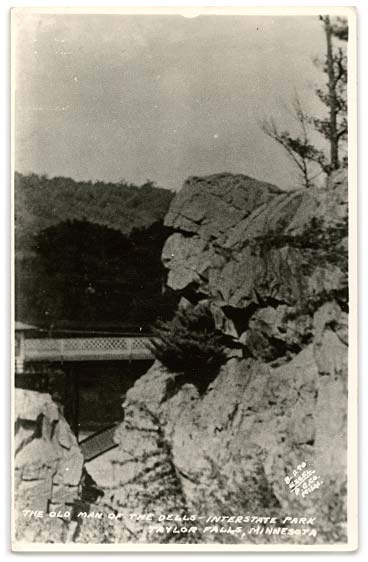 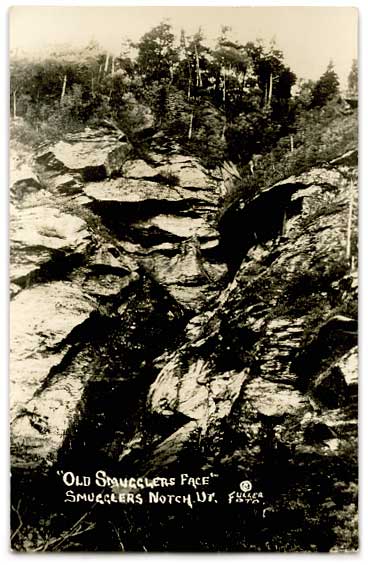
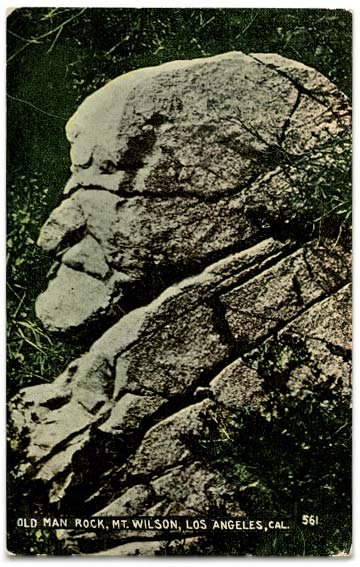 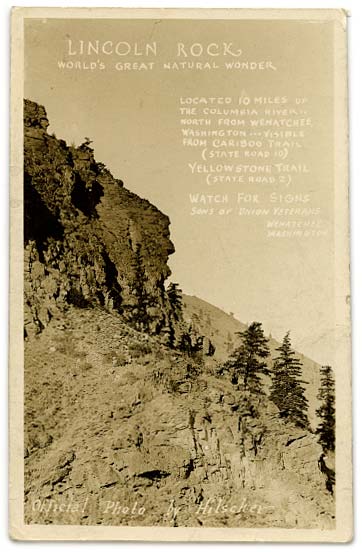
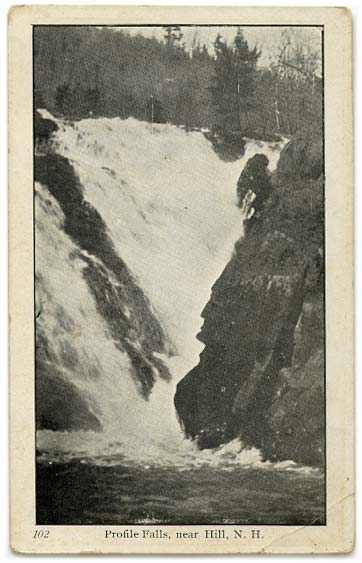 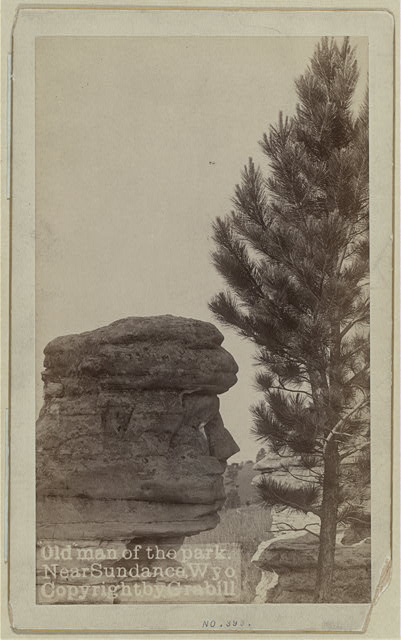
For more examples like this see:
http://www.mnmuseumofthems.org/Faces/intro.html
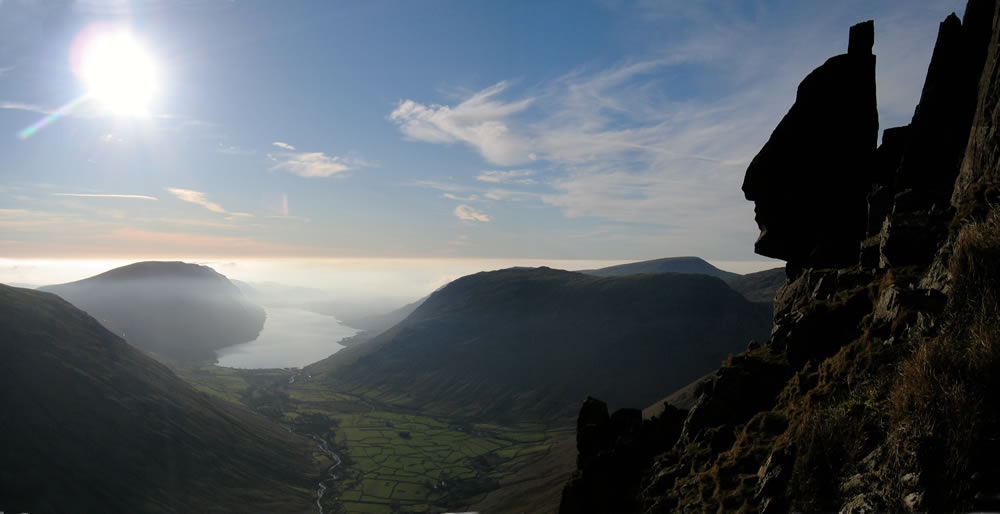
Sphinx rock, The Napes, Great Gable, Lake district. (Photo: Tom
Phillips 2007)
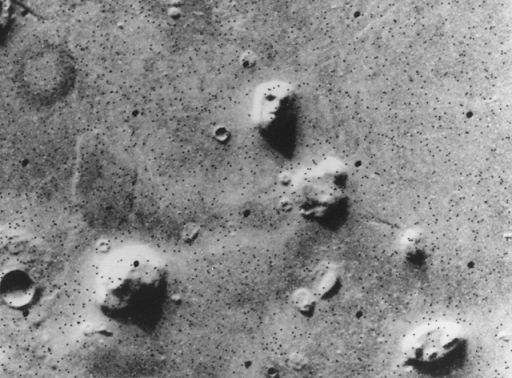
The original unaltered image from Viking.
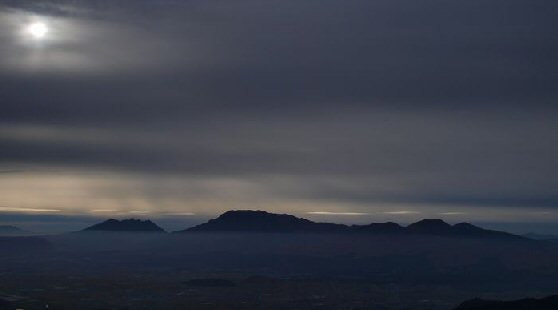
The 'Sleeping Buddha', Japan.
Each of the five peaks is a dormant volcano.
(Photo Credits: Kyoko
Ohwaki)
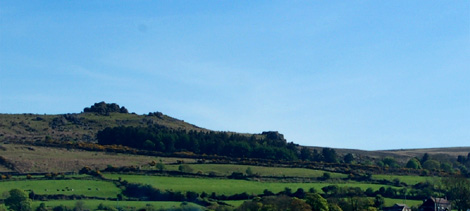
The sacred peak ('Goddess') of Carn
Ingli, in Pembrokeshire, home of the Stonehenge 'Bluestones'. (The
landscape becomes connected through the outline of Carn Ingli being
reflected in the original shape of nearby
Pentre Ifan).
Photo Credits: (sleepinggiant-newport-pembs.php)
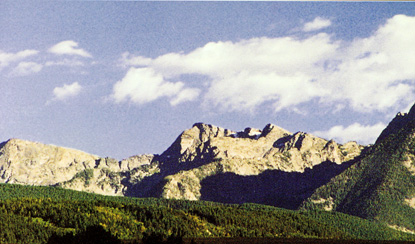
Photo Credits :
(http://www.mnmuseumofthems.org/Faces/intro.html)
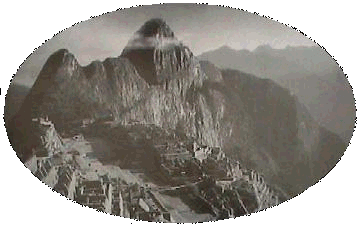
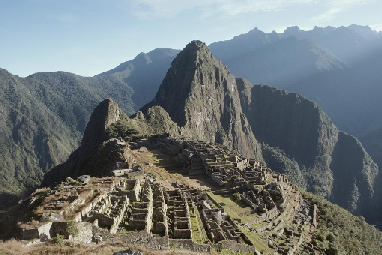
Machu Pichu -Image left: Altered image for coffee advert, Image right: The real
thing.
(Machu Pichu, Peru)
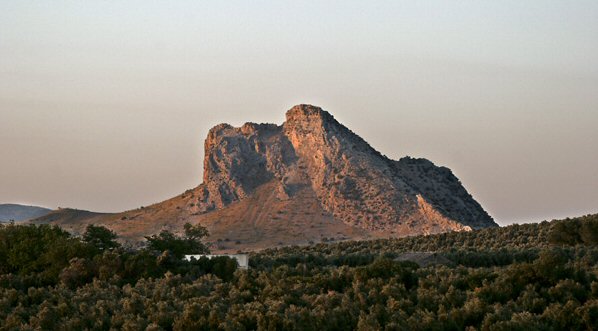
Peneda de los Namorados (As
viewed from the Cueva de Menga
Dolmen).
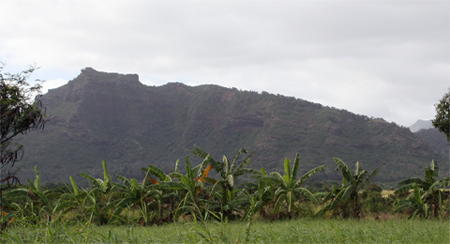
Nounou mountain, Kauai:
Legends state that this giant once roamed the land and was much
loved by the Hawaiians. They planted taro fields in his footsteps.
One day the village chief wanted a new heaiu built. The
villagers were much too busy farming so the giant volunteered. It
took him two weeks to complete the project and when he was done, the
village had a luau for him. It is said that after eating so
much at the party, the giant laid down and has not awoken yet.
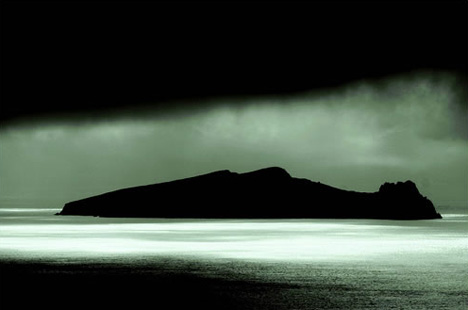
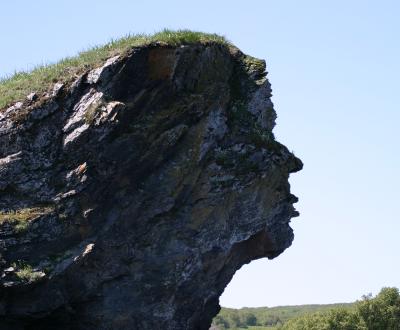
Inishtooskert (Inis Tuaisceart in
Irish) is the northernmost of the Blasket Islands, County Kerry,
Ireland. The
name means "northern island". The island is also known as An Fear
Marbh (the dead man) or the sleeping giant.
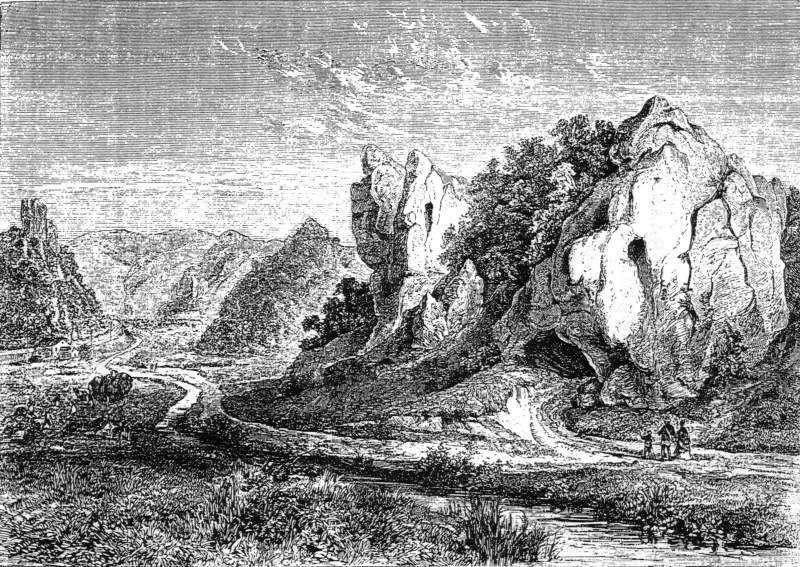
This sketch of
Hohle Fels in Germany illustrates that the cave has the appearance
of being the 'mouth' of a face in the mountain (when there are no
trees to obscure it). This anthropomorphic imagery may well have
added to the importance of the site, which has produced some
exceptionally carved items from c. 30,000 - 40,000 BP .
(More
about Hohle Fels, Germany)
|
Anthropomorphic Megaliths: |
The
Cueva de Menga Dolmen in Spain (above)
was built with its entrance facing the Peneda de los Namorados. This
dolmen/Passage mound is the largest in all Europe, and demonstrates the power of natural anthropomorphism on the
prehistoric mind. The same faces are visible at several other
European sites.
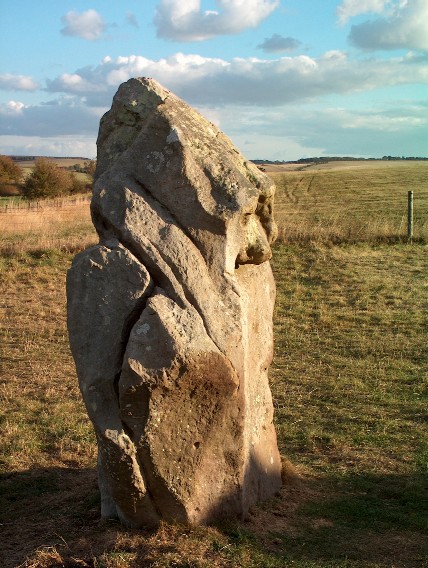 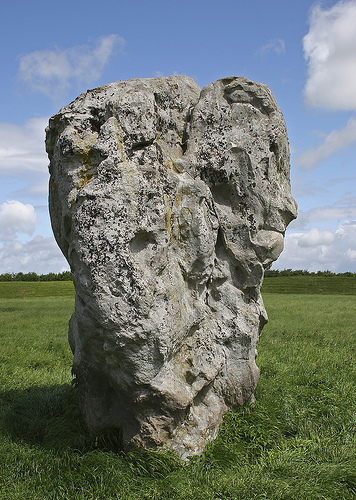
Photo credits: (left: 'Up-in-smoke' Ken).
(Right -
http://www.stonecentric.connectfree.co.uk)
The faces at Avebury
have been noticed before. The following stone was carved, probably
to accentuate an existing feature.
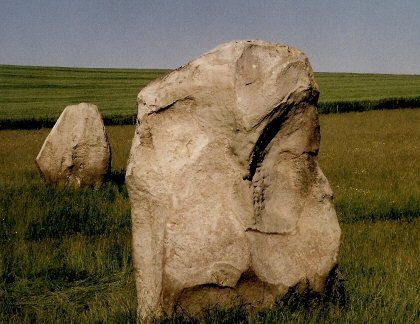
(More about the
carved faces at Avebury)
(More about Avebury)
- Stonehenge, England:
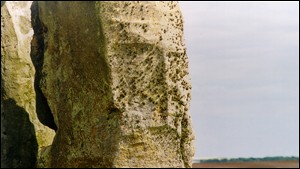
The following face was first recorded at Stonehenge
in 1999.
http://news.bbc.co.uk/1/hi/sci/tech/474977.stm
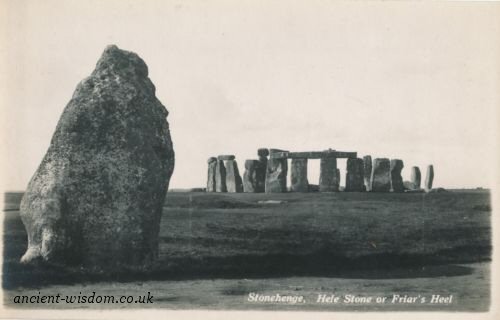
Old Postcard showing the silhouette of the face on the 'Hele'
or 'Friars' stone.
(More
about Stonehenge)
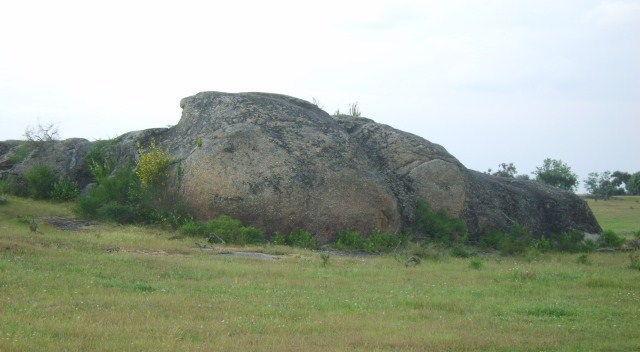
The
Drag�o de San Miguel, (St. Michael's
dragon) is a natural rock feature right next to the spectacular
Anta do Tapad�o in the Alentejo, Portugal.
(More about St. michael)
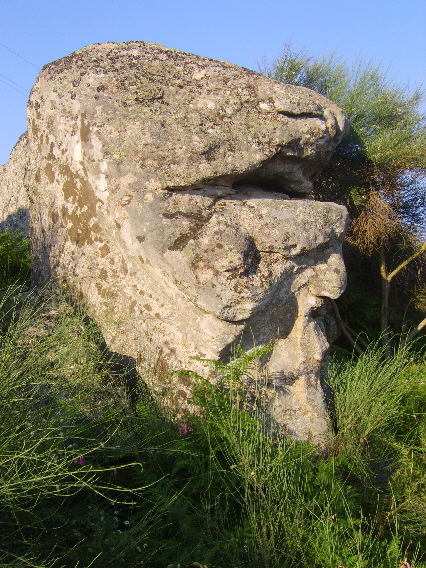
At the other end of the 'dragon', this face
protrudes from the living-rock towards the dolmen.
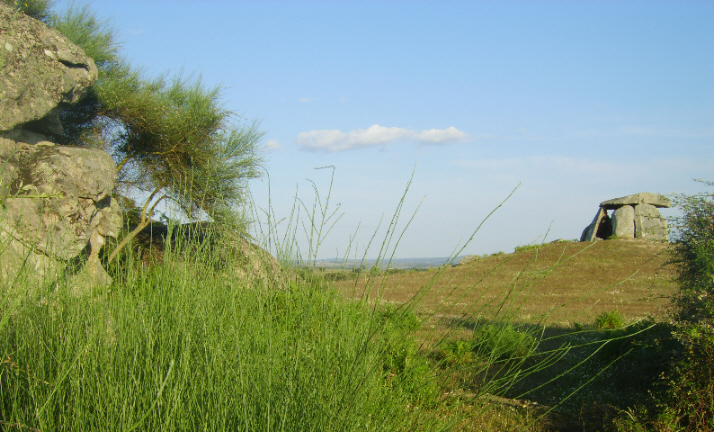
Even today these rock-features lend their presence to the
atmosphere of the site.
(More about Tapad�o)
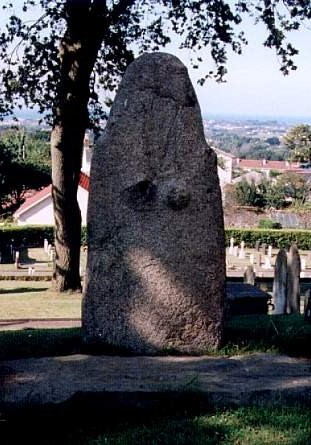
This 1.65m high slab of granite was
found under the chancel in the church. It now stands in the
nearby graveyard. There were once signs of a necklace, and one breast has
been broken off.
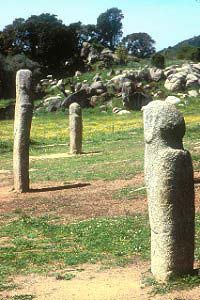
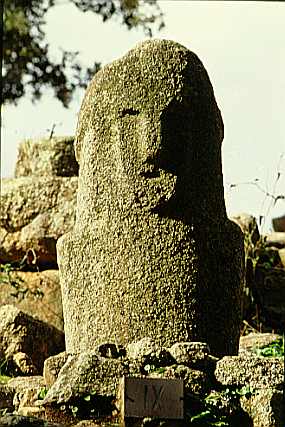
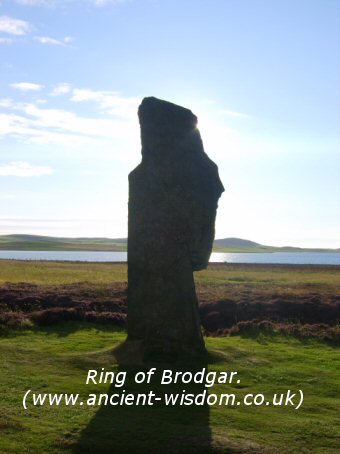
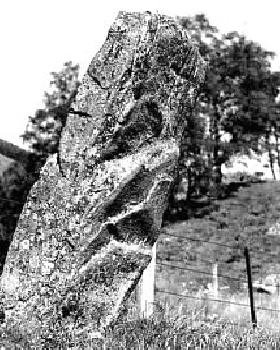
Left: Ring of Brodgar, (The
Orkneys). Right:
Adamnen, Glen Lyon. (Christianised on
rear).
-
Spain:
The
Cueva de Menga complex is one of Europe's finest examples of
chambered passage mounds. The site has three large structures, each
with its own individual style and personality. The largest of the
group, with the largest capstone estimated at around 180 tons, is
the Cueva de Menga, which is orientated towards the Pena de los
Namorados, which dominates the landscape all round, but only
appears as a face from one direction. The passage mounds are also
aligned to the towering peak, offering one of the best indications
that our Neolithic ancestors looked upon such features as having a
special significance, adding to the levels of significance involved
in building such monumental structures.
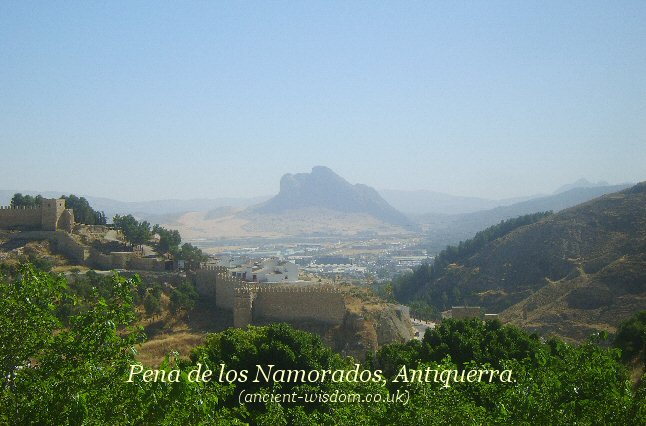
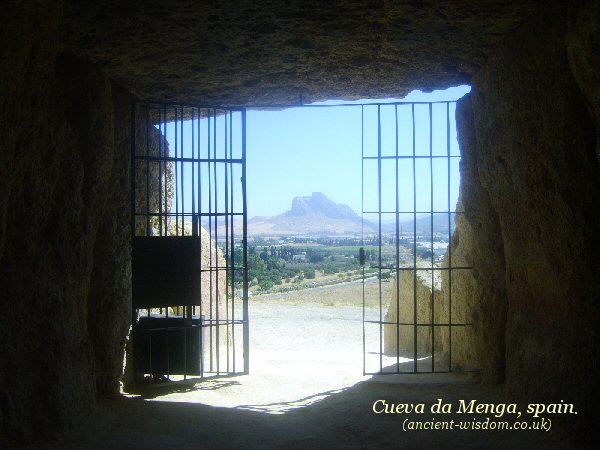
Cueva de Menga
was clearly orientated towards the Pena de los Namorados.
(Return to
Top) (Altered
Landscapes) |