|
 Mythology:
(Fact or Fiction)
Mythology:
(Fact or Fiction)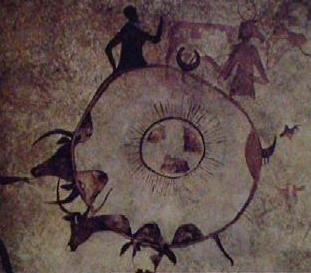
The tradition of story-telling has roots that
can be traced deep into humanities distant past. Even today, the art of
oration continues to play a part in the continuity of cultural preservation
around the world.
Certain of these stories have
perpetuated themselves into the
mythological psyche of humanity.
The age and importance of
these surviving cultural relics is further enhanced by the fact that in
certain cases they appear to have transcended cultural borders, i.e. the
flood myth (see below). While it has long been
declared that myths are largely fictitious, there is a school of thought
that argues otherwise.
| |
|
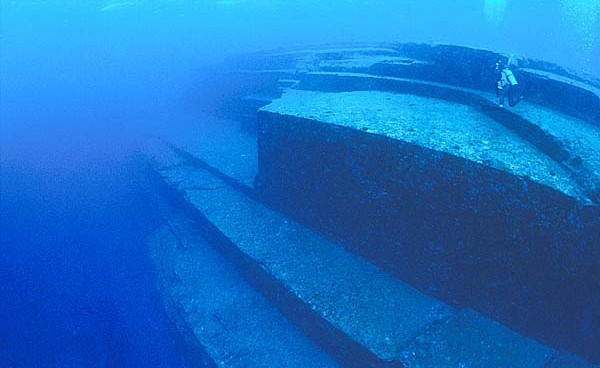 |
With over a hundred independent world-wide accounts of the 'Great Flood',
this is the classic archetypal myth. In addition to having been
recorded globally, a number of isolated versions of the myth carry numerous
specific details in common.
(More
about the Flood Myth) |
| |
|
| |
 |
|
|
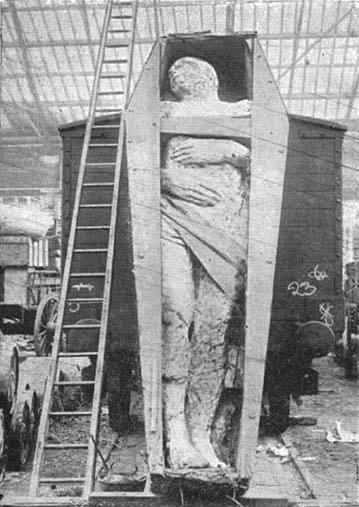
Giants were recorded in ancient text and archaeological discovery supports the idea that races of 'Giants'
may have once existed. Even today, the genetic variation of our species
includes a percentage with gigantism, suggesting that stories of giants cannot be so easily
refuted.
(More about Giants)
|
| |
|
| |
|
 |
This curious combination of symbols appears in mythologies
from around the ancient world, but what are their origins and how are we to
explain the fact that so many apparently unrelated cultures adopted these
two strikingly contrary symbols independently of each other?
(More about Feathered
Serpents)
|
| |
|
| |
 |
|
|
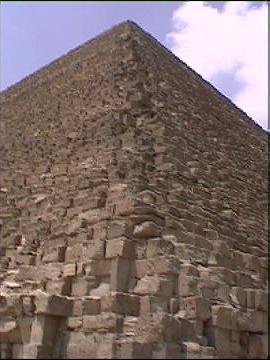
From the Greek Olympus to the Indian 'Mount Mashu', the belief in
the concept of a World mountain is found in myths around the ancient
world. There is speculation
that the world mountain may refer to the Great pyramid as passages in the
Egyptian 'Book of the Dead' are suggested to refer to it.
(More
about the World Mountain) |
| |
|
| |
|
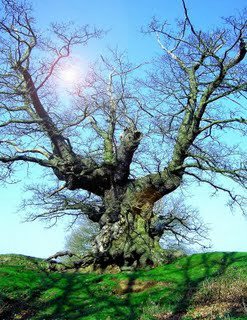 |
According to Jung,
trees are a symbolic reference to the self. They
are entwined into some of the earliest
mythologies we have such as the 'World-Tree', or
'Tree-of-life', which are amongst the most
common motif's from the ancient world.
(Tree-Lore
and the Tree of Life)
|
| |
|
|
|
|
Mythology as a Historical Narrative |
It was long believed that
the city of Troy was an imaginary city from Homer's 'Illiad'.
However, in 1871 Dr Heindrich Schlieman used the text in order to discover
its location. Troy is an example of the way in which facts become
'mythologised' over time.
Discoveries such as the city of Troy (Illium)
demonstrates the fact that myth's can be based on fact. We cannot
however conclude from this that all myths are based on fact. It is equally
likely that some myths may have become embellished over time from a 'seed'
of truth, which can no longer be separated from the sheath of fictitious narrative,
for example although we now know Troy to have been a real city:
In Homers 'Iliad' (17. 426 pp), concerning the fall of Troy, he writes that:
"The horses of Aiakides (Akhilleus, Achilles) standing apart from the
battle wept, as they had done since they heard how their charioteer
(Patroklos) had fallen in the dust at the hands of murderous Hektor".
Such a description certainly evokes the misery felt at the loss of the commanding
officer, an event which may indeed have occurred, but when we are informed
that Hector's horses also wept at his passing, we pass the point
where fact separates from fiction.
As previously mentioned, it has been observed that
certain ' universal' myths have been repeated within apparently unrelated
cultures from around the world. The following arguments are put
forward to explain this:
1. - That they are
descriptions of events which were witnessed simultaneously around the
world.
2. - That they are stories that have originated from a
single
ancient common source.
3. - That humanity possesses a collective
conscious (See Jung).
The Following Story is an Example of a Folk-tale Which led to an Archaeological
Discovery:
'Sometimes local
tradition, which is wonderfully long-lived, helps the archaeologist in
his discoveries. An old man told an antiquary that a certain barrow in
his parish was haunted by the ghost of a soldier who wore golden armour.
The antiquary determined to investigate and dug into the barrow, and
there found the body of a man with a gold or bronze breastplate. I am
not sure whether the armour was gold or bronze. Now here is an amazing
instance of folk-memory. The chieftain was buried probably in
Anglo-Saxon times, or possibly earlier. During thirteen hundred years,
at least, the memory of that burial has been handed down from father to
son until the present day. It almost seems incredible'
(2).
10,000 Year Old Aboriginal Myths Based on Fact.
An Australian
linguist,
R. M. W. Dixon, recording Aboriginal myths in their
original languages, encountered coincidences between some of
the landscape details being told about within various myths,
and
scientific discoveries being made about the same landscapes.
In the case of the
Atherton Tableland, myths tell of the origins of
Lake Eacham,
Lake Barrine, and
Lake Euramo.
'It is said that two
newly-initiated men broke a taboo and angered the rainbow
serpent Yamany, major spirit of the area ... As a result 'the
camping-place began to change, the earth under the camp roaring
like thunder. The wind started to blow down, as if a cyclone
were coming. The camping-place began to twist and crack. While
this was happening there was in the sky a red cloud, of a hue
never seen before. The people tried to run from side to side but
were swallowed by a crack which opened in the ground'....
Geological research dated the formative
volcanic explosions described by Aboriginal myth tellers as
having occurred more than 10,000 years ago.
Pollen fossil sampling from the silt which had settled to
the bottom of the craters confirmed the Aboriginal myth-tellers'
story. Since then, Dixon has assembled a number of similar examples
of Australian Aboriginal myths that accurately describe landscapes
of an ancient past.
(More
about Aboriginal Mythology)
Easily the most common global
myth is that of a great deluge which almost eliminated life on Earth.
Variations of this story occur from all round the world, many of which contain
similar details. For example, in almost all versions the survivor/s are
forewarned of the deluge. They are given instructions to build a craft, to
store a selection of life on board, they use birds to find land, and are the
progenitors of the species from that time on. In fact, there are well over 50 similar flood myths world-wide. Some of the better known versions follow:
Hindu -
'Manu', a hero, finds a fish, rears it and then releases it into the Ganges.
As a reward the fish announces it will save him from a purification of the
world. It gives him instructions to build a ship with stores and everything
is destroyed except Manu and the seven 'Rishis' he had taken. The fish
guides the boat until they reach a mountain top, whereupon it reveals itself
as 'Prajapati' (or Vishnu in versions), the supreme god who helps Manu
recreate life on earth.
Aztec -
('Na-Hui-Atl' -
The age of water). After the world had existed for 1716 years
the flood came. All mankind was lost and drowned and found themselves
changed to fish. In a single day all was lost. Only 'Nata' and his wife
'Nana' were saved, having been warned by the god 'Titlacahuan' to make a
boat from a Cyprus tree.
Maori -
Mankind once became so disrespectful of the great God ' Tane' who had created
them that there were only two prophets left who preached the truth. Insulted
by men, they built a house on a huge raft, stocked it with food and dogs,
and brought down heavy rain by incantation to demonstrate the powers of 'Tane'.
The waters rose and the prophets embarked with a few others. After six
months the flood began to subside and they settled on dry land, to discover
the whole world and its inhabitants had been destroyed.
Greek mythology refers to three floods.
The flood of
Ogyges, the flood of
Deucalion
and the flood of
Dardanus, two of which
ended two 'Ages of Man': the Ogygian Deluge ended the Silver Age, and the
flood of Deucalion ended the First Bronze Age.
'Zeus sent a flood to destroy the
men of the Bronze Age. Prometheus advised his son Deucalion to build a
chest. All other men perished except for a few who escaped to high
mountains. The mountains in Thessaly were parted, and all the world
beyond the Isthmus and Peloponnese was overwhelmed. Deucalion and his
wife Pyrrha (daughter of Epimetheus and Pandora), after floating in
the chest for nine days and nights, landed on Parnassus. When the
rains ceased, he sacrificed to Zeus, the God of Escape. At the bidding
of Zeus, he threw stones over his head; they became men, and the
stones which Pyrrha threw became women. That is why people are called
laoi, from laas, "a stone." [Apollodorus, 1.7.2]
'The first race of people was
completely destroyed because they were exceedingly wicked. The
fountains of the deep opened, the rain fell in torrents, and the
rivers and seas rose to cover the earth, killing all of them.
Deucalion survived due to his prudence and piety and linked the first
and second race of men. Onto a great ark he loaded his wives and
children and all animals. The animals came to him, and by God's help,
remained friendly for the duration of the flood. The flood waters
escaped down a chasm opened in Hierapolis'. [Frazer,
pp. 153-154]
'An earlier flood was reported to
have occurred in the time of Ogyges, founder and king of Thebes. The
flood covered the whole world and was so devastating that the country
remained without kings until the reign of Cecrops'. [Gaster, p. 87]
'Nannacus, king of Phrygia, lived
before the time of Deucalion and foresaw that he and all people would
perish in a coming flood. He and the Phrygians lamented bitterly,
hence the old proverb about "weeping like (or for) Nannacus." After
the deluge had destroyed all humanity, Zeus commanded Prometheus and
Athena to fashion mud images, and Zeus summoned winds to breathe life
into them. The place where they were made is called Iconium after
these images'. [Frazer, p. 155]
"Many great deluges have taken
place during the nine thousand years" since Athens and Atlantis were
preeminent. Destruction by fire and other catastrophes was also
common. In these floods, water rose from below, destroying city
dwellers but not mountain people. The floods, especially the third
great flood before Deucalion, washed away most of Athens' fertile
soil. [Plato, "Timaeus" 22, "Critias" 111-112]
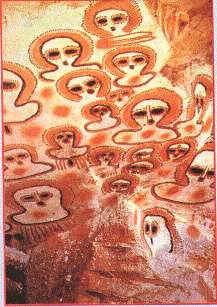 The
Aboriginal Flood Myth: The
Aboriginal Flood Myth:
In
Aboriginal mythology there are beings called the Wondjina. They were
rain spirits who were also involved with creation. They are said to
come from the sky and paint pictures of themselves on cave walls.
At one point in time it is said, the Wondjina were angry at how people were
behaving in the world, so they caused a worldwide flood. This was
caused by them opening their mouths, and when
they did this rain would never cease. After the floods had killed
all the humans, the Wondjina recreated everything.
Obviously the Wondjina had to keep their mouths shut so that the
world wouldn�t flood again. After doing this so long, their mouths
disappeared, which is why in most images of them they have no mouths.
The Wondjina eventually they lost their form and became more like
the spirits that you and I think of. They are said to still exist in
waterholes and ponds.
(Aboriginal Mythology)
We are left with a clear
record of flood-events from around the ancient world. The most recent known
mega-flood events were a result of the end of the last great Ice-age, which
occurred over three main flood periods following the Ice-age, it is very
likely that the global flood-myths are testimony of these events.
Textual
References to a Mega-Flood:
Assyrian: An inscription on a tablet in the
British museum (K3050, K2964), bears testament by the Assyrian king Ashurbanipal to the following:
'I have read the artistic script of
the Sumer and the dark script of the Akadian and now I take great
pleasure in the reading of the stone inscriptions from
before the flood'.
In 1922, the Weld-Blundell
expedition excavating at Sumerian Larsa discovered the 'Weld Prism', now
in the Ashmolean museum, Oxford. The prism contains a history written by
a scribe called 'Nur-Ninsubur' in approx 2100 BC. In his account he
records the list of ten pre-flood kings (a legendary era of 241,200
years), and ends his writing with the words, 'and the Flood overthrew
the land'. Enki warns the king of Sippar 'Ziasudra', who escapes.
(9)
225 A.H. (836 AD) - Papyrus of Abou
Hormeis:
'In this manner were the pyramids
built. Upon the walls were written the mysteries of science, astronomy,
geometry, physics, and much useful knowledge, which any person, who
understands our writing, can read. The deluge was to take place
when the heart of the lion entered the first minute of the head of cancer, at
the declining of the star. The other indications were the sun and moon
entering into the first minute of the head of Aries and Saturn, in the first
degree and twenty eight minutes of Aries; and Jupiter, in the twenty-ninth
degree twenty-eight minutes of Pisces; and Hermes, i.e. Mercury, in the fifth
degree and three minutes of the Lion.'
(Note- This
particular account was translated
from the Coptic into Arabic c. 225 A.H., supposed to be four thousand three hundred
and twenty-one years after the construction of the pyramids (836AD = 4321
- 836 = 3,485 BC) an account of the appearance of the heavens when the
waters subsided, is also included).
2,400 BC - The Canons of the Chinese Emperor:
'In the lifetime of Yao, the sun did not set for ten full
days and the entire land was flooded by an immense wave, that reached
the sky'.
(Underwater Archaeology)
Pre-Columbian A merica.
The Aztec god
Quetzalcoatl is
represented as a 'feathered serpent'. Also known as Kukulcan to the Mayans,
the feathered serpent features heavily in south American iconography.
The Maya called the plumed dragon Cuculcan or Cucumatz, the Zu�i
Kolowissi. As far South as Venezuela we hear of the snake
Huiio who crowned herself with the scattered feathers of the ancestral birds,
as the Makiritare people report.
El Castillo - The temple of Kukulcan,
Chichen Itza, Mexico.
Each face of the pyramid has a stairway with ninety-one steps, which
together with the shared step of the platform at the top, add up to 365 (full-days
in the solar year). The stairs also divided into nine terraces of
each side of the pyramid into eighteen segments, representing the eighteen
months of the Mayan calendar.
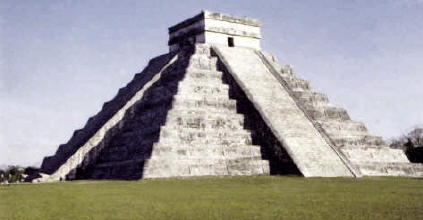
During the Equinoxes, the sun causes a shadow of a serpent on the
northern steps of the pyramid. In the spring, it appears to ascend, and in
the autumn it descends again
(1)
The Pyramid of
the feathered serpent
is located at Teotihuac�n. Located in the Ciudadela at the southern end
of the Avenue of the Dead.
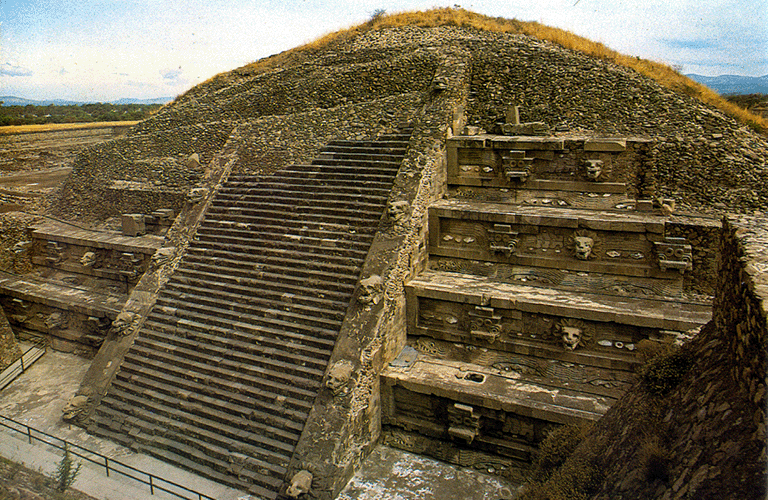
This pyramid was built over existing structures, and has
been built over since by the 'Adosada', which was integrated into the design
of the original temple, archaeology has re-exposed the original temple of
the feathered serpent, upon which can be seen the numerous 'feathered
serpents' heads carved into the temples facade and stairwell.
(More about Prehistoric Mexico)
Egyptian feathered serpents:
There are several striking similarities between Mesoamerican
feathered serpents and those from ancient Egypt.
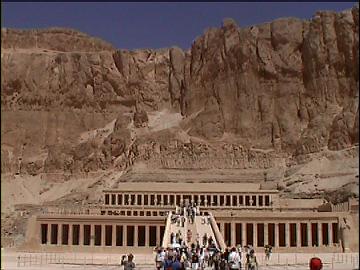
T emple of Hatshepsut:
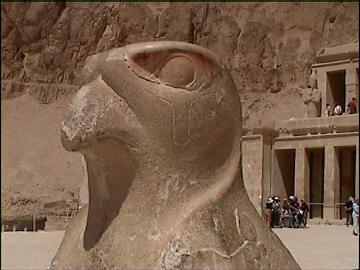
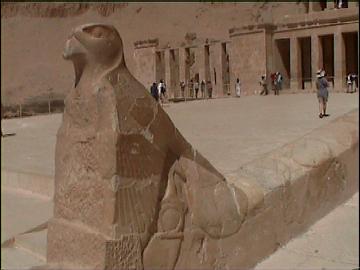
Of particular interest is the Temple of Hatshepsut, which is entered by
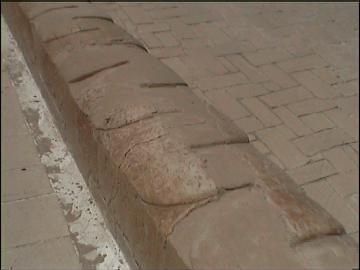
passing up a long sloping ramp, with stairs up the centre and stone banisters
with a serpent running from top to bottom, ending at the bottom in a birds body.
The Royal insignia
on all of Tutankhamun's
(1336-1327 BC)
coffin masks and head-dresses have both the serpent and the snake on them.
(The
Nekhbet-vulture and
Buto-uraeus),
demonstrating the importance of these symbols to the Egyptians.
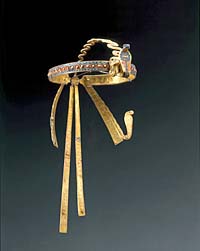
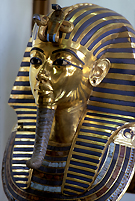
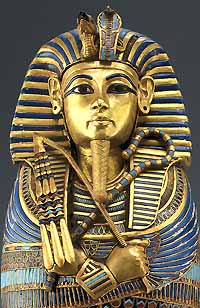
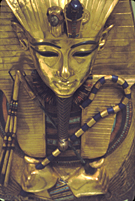
From left to Right; Tutankhamun's headband, his funerary
mask, The funerary casket and second funerary casket.
Greek Feathered Serpents:
The Caduceus.
(Rod of Hermes)
According to mythology, Hermes
threw his magic wand at two fighting snakes. The snakes became entwined as
they stopped fighting. The actual origin of the Caduceus is from two
sources. The first was from the Babylonia god Ningizzida and the second was
from a shepherd's crook that was forked on top.
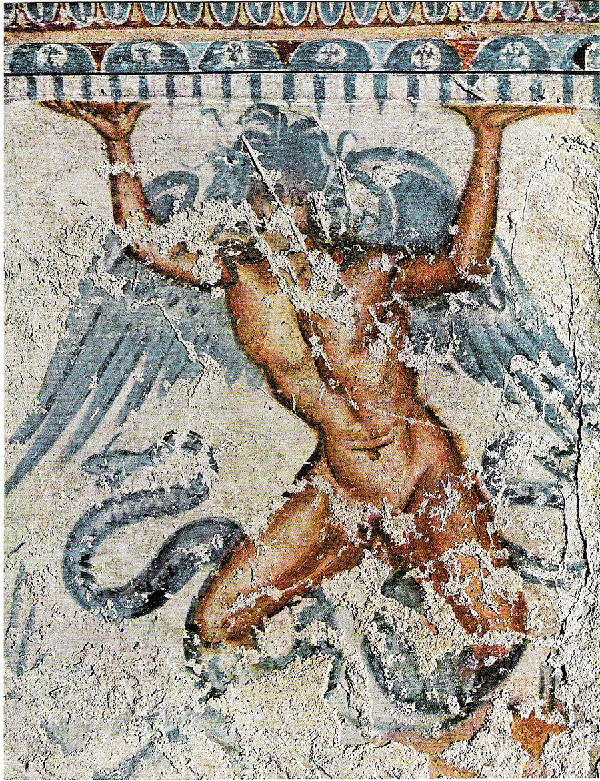
Typhon. (Typhaon,
Typhoeus, Typhus) was the last son of Gaia. Typhon's father was tartarus. He
is described as having a hundred serpent heads. With Echidna Typhon's
children were Cerberus, the Lernaean hydra, and the Chimaera. Typhon is
mentioned by Hesiod, Pindar, Aeschylus, and the Homeric Hymn to Apollo.
Later writers identified him with the Egyptian god
Seth.
In Greek mythology, the heaven-spanning giant Typhon had serpents for legs and a body "all winged" or feathered, as Apollodorus reported.
On the right is an Etruscan Mural
from the Tomb of Orcus, in which we can see Typh�eus, whose legs are
serpents, bracing himself beneath the land. His constant struggle causes Mt.
Etna to roar.
(More about the
Etruscans)
Winged Serpents (Dragons) in Myth:
Babylon -
Apep, the
Seven-Headed Dragon of Egypt has been identified with Tiamat, the Great
Dragon of Sumeria, slain by Marduk. This primordial goddess is the
prototype of the biblical monster Leviathan. It is little known that in the
Book of Revelation this same Dragon makes an anonymous guest appearance.
Britain-
St. George, St Margaret and St Michael are the three traditional British
Dragon slayers of fable. Many of the locations dedicated to St. Michael have
been determined to have a secondary astronomical association and placed in
alignments, The St. Michael's lay runs across Britain from Cornwall to
Norfolk.
(More about St. Michael)
Chinese -
Dragon gods and
living dragon culture. 'Dragon-lines' of feng-shui.
|
The Day the Sun Stood Still: |
The following remarkable set of myths from around the
ancient world appears to confirm the occurrence of an otherwise
unexplainable astronomical
phenomena.
Joshua
-
'...As they fled from
before Israel the Lord cast down great stones from heaven unto Azekah, and
they died : they were more which died with hail stones (stones of barad)
than they whom the children of Israel slew with the sword ...And he said in
the sight of Israel, Sun, stand thou still upon Gideon; and thou, Moon, in
the valley of Ajalon. And the Sun stood still, and the moon stayed, until
the people had avenged themselves upon their enemies. Is it not written in
the book of Jasher? So the sun stood still in the midst of heaven, and
hastened not to go down about a whole day. And there was no day like that
before it or after it...'
(Ref: Joshua (10:11-14),
compiled from the more ancient book of Jasher).
The 'Midrashim',
the books on ancient traditions which are not embodied in the scriptures,
relates that the sun and the moon stood still for thirty six 'Itim',
or eighteen hours, and thus from sunrise to sunset the day lasted about
thirty hours.
(22).
Although these
myth-stories could be argued to have originated from an original source, the
same cannot be said so easily of the following accounts, which originate
from other apparently independent cultures from the ancient world.
Sahagun
-
The Spanish savant who came to America a generation
Columbus and gathered the traditions of the natives, wrote that at the time
of one cosmic catastrophe the
sun rose only a little way over the horizon
and remained there without moving: the moon
also stood still. (22).
The
Andeans record a myth-story that
the sun stayed away for twenty hours. This
event is said to have occurred under the reign of Yupanqui Pachacuti II, the
fifteenth ruler of the old time.
In the
Mexican 'Annals of Cuauhtitlan' or 'Codex Chimpalpopoca'
- the history of the empire in Culhuacan and Mexico, written in Nahua-Indian
in the sixteenth century - it is related that during a cosmic catastrophe
that occurred in the remote past, the night did not end for an
extended period of time.
(22).
And from Asia -
The canons of the Chinese emperor. (2,400 BC
?) - 'In the
lifetime of Yao, the
sun did not set
for ten full days and the entire land was flooded (by an immense wave), that
reached the sky'.
It is important to recognise that all these
stories were recorded from different
locations on earth. On one side of the Earth people record that the Sun
stayed in the sky, while on the other side, the stores are that the Sun
stayed away.
The most logical cause of the appearance of the Sun,
Moon and stars stopping in their paths, is that in fact, we stopped turning on ours.
But what could cause a temporary cessation of the rotation of our globe? It
has been suggested that a possibility could have been that something large affected our
ordered symmetry momentarily (Such as a large celestial object). It is possible that earths rotation has been affected more
than once before in the past. Velikovsky concluded that the earth was hit
twice with a gap of 52 years between events. This is supported by Mayan
tradition. The number off times, duration or cause of these
incidents remains undetermined.
As Earths rotation has reduced in recent years by an average
of one second every 500 days (leap second), our Earth will, if the
deceleration rate remains constant, show no self rotation around its axis
within less than 120,000 years,
(8).
We are reminded also of the story of
Phaethon, in which the 'sun chariot roamed'
Phaethon/Phaeton - 'The blazing one' -
The best known version of this Greek
legend is that of the Latin poet, Ovid, who wrote that Pheathon, who claimed
parentage from the sun, tried to drive the chariot of the sun but was unable
to make his way 'against the whirling poles,' and 'their swift
axis' swept him away. The chariot of the sun moved 'no longer in the
same course as before.' The horses 'break loose from their course'
and 'rush aimlessly, knocking against the stars set deep in the sky and
snatching the chariot along through uncharted ways. The
constellations of the cold Bears tried to plunge into the forbidden sea, and
the suns chariot roamed...as a useless ship driven before the
headlong blast, whose pilot has let the rudder go and abandoned the ship to
the gods..'. Ovid then continues to describe how 'The earth burst into
flame...' and catastrophe ensued. He ends the story with the phrase, 'she
(the earth).....sank back a little lower than her wanton place'.
(Ref: Ovid. Metamorphoses).
Solon -
On his visit to Egypt, questioned the priests on early
history and lore was told '....in truth, the story that is told in your
country as well as ours, how once upon a time Phaethon, son of Helios, yoked
his fathers chariot, and, because he was unable to drive it along the course
taken by his father, burnt up all that was upon the earth and himself
perished in a thunderbolt - that story, as it is told, has the fashion of a
legend, but the truth of it lies in the occurrence of a shifting of the
bodies in the heavens which move around the earth, and a destruction of
things on the earth...'.
(Ref: Plato.
Timaeus)
There are several references to a 'world-mountain'
in ancient myth. The same theme is companioned with
associations to the underworld and the afterlife.
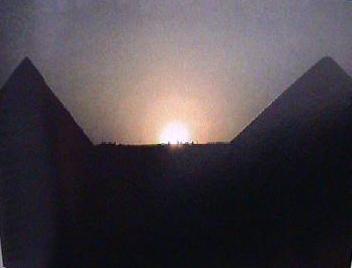
Mount ' Mashu'
(Machu?), which means 'Twins' in Akkadian, was the
mythological mountain
with twin peaks into which the sun descends at nightfall.
The presence of an apparently
global 'pyramid culture' supports the idea that the 'World mountain'
is an primitive concept, and one which crosses into the depths of
archetypal mythology.
(Article: Pyramids
and the Underworld)
The 'Pyramid texts'
state that the goal of a pharaoh after death is
'The duat'. In the land of the mountain gods. He has to enter the 'house
of two truths', 'the house of fire'. Reachable by entering
a mountain and going down hidden paths and secret doors etc. 'At
the gate of the duat the folding doors of the mountain of light are
opened to thee'.
The Chinese
have a sacred/world mountain called 'Hua Shan' of the
West.
(Prehistoric China)
The Babylonian 'Temple Towers'
were symbols of the world hill.
The name of Enlil's temple at Nippur
has been translated as 'Mountain
House' or 'Like a mountain'. These Babylonian 'Temple towers' were
symbols of the 'world-hill' . SSumerian texts refer to the E.KUR, meaning 'House which is like a
Mountain'. They depicted the E.kur on clay tablets by a square-based
pyramid with wings, sometimes with a spherical glowing apex, sometimes
even accompanied by a lion-shaped statue.
The oldest complete text in the world, The Epic of
Gilgamesh, refers to Mount 'Mashi' or 'Sunset
hill',..which divided the land of living with dead. A Dark
tunnel pierces it. He (Gilgamesh) enters through a door and follows the suns road
for 12 leagues (12 hours = the Amduat), to its rising through the
mountain
(Ref: p.177 Babylonian myths)
The Great pyramid has been referred to
as the 'Bible in Stone',
by a number of people. The most seemingly
appropriate references from the bible are: 'Isaiah. Ch 19: 19, 20. 'In
that day shall there be an alter to the lord in the midst of the land
of Egypt, and a pillar at the border thereof to the lord, and it shall
be a sign and for a witness unto the lord of hosts in the land of
Egypt'. Seiss
(15),
notes that the word
'Alter' in Hebrew, translates as 'The lion of God'.
Ezekiel describes an alter as 'The
mountain of God'.
(More about the Great Pyramid)
(More about The Giza Complex)
(Prehistoric Egypt Homepage)
|
The 'World-Tree' - 'Tree of Life'... |
According to the Encyclop�dia Britannica,
the tree of knowledge and the tree of life, are both forms of
the world tree or cosmic tree.
(4)
The image of the
Tree of life is also a favourite in many
mythologies. Various forms of
trees of life also appear in folklore, culture and
fiction, often relating to
immortality or
fertility. These often hold cultural and religious
significance to the peoples for whom they appear. For
them, it may also strongly be connected with the motif
of the world tree.
The Tree of Life in Mythology:
Extract From
(5):
 Buddhism tells of Sakyamuni�s birth and a flash
of light that travelled around the world that sparked the first
growth of the Tree of Perfection � a sacred fig tree that it is
said to have been four hundred feet high that bloomed with flowers
and fruit that glowed and glistened. It is said that the Buddha was
born, received his enlightenment, preached his first sermon and died
all under the Bodhi tree. Some say he sat under the tree for six
years protected by the tree while he was enlightened. Buddhism tells of Sakyamuni�s birth and a flash
of light that travelled around the world that sparked the first
growth of the Tree of Perfection � a sacred fig tree that it is
said to have been four hundred feet high that bloomed with flowers
and fruit that glowed and glistened. It is said that the Buddha was
born, received his enlightenment, preached his first sermon and died
all under the Bodhi tree. Some say he sat under the tree for six
years protected by the tree while he was enlightened.
In the Judeo-Christian parable in the Book of
Genesis there are actually two trees, the Tree of Life and the Tree
of Knowledge. A tree planted by God in the Garden of Eden that Adam
and Eve are commanded and warned not to eat from (it is the Tree of
Knowledge that God explicitly warned them about) but are tricked by
a crafty and cunning serpent who promises that they will become as
wise as God, that they will know knowledge and wisdom (consciousness
of duality) and never die if they eat. They indulged in its fruit
and they were cast out and banished from the garden. The prophet
Enoch describes the tree as bearing like grapes with a beautiful
fragrance. Talmudic scripture suggest that Eve made wine from the
fruit. It is the Tree of Knowledge that Christ is said to have been
crucified upon.
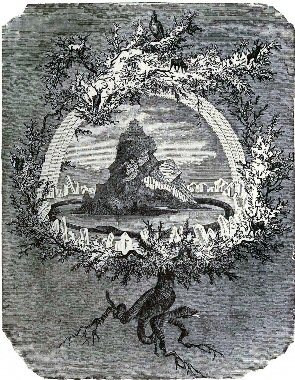
In Norse mythology Yaggdrasil is the holy Ash
World Tree surrounded by nine worlds. It is said to connect the
Underworld to Heaven with its branches and roots. Odin is said to
have hung on the tree for nine days, self-sacrificed so that he
could bring the wisdom of the runes to his people. Once again, from
the symbol of the tree flows human awareness and consciousness.
In Egypt the Holy Sycamore is said to stand on
the threshold of life and death, connecting the worlds. It stands
at the Eastern gate of Heaven from which the sun rises each
morning. A number of different types of trees had different
functions and were sacred to different Egyptian deities.
In alchemical traditions the Arbor Philsophica is
another tree that is said to bear alchemical symbols representing
the seven planets and the processes of alchemy. These planets
correspond to the seven metals gold, silver, copper, iron, mercury,
lead and tin which were all said to grow on the tree. The tree is
said to grow from the ground or sometimes from the body of man. Jung
speaks of a dream where he sees a tree with branches of gold,
silver, steel and mixed iron which he realises corresponds to the
Arbor Philsophica and symbolises growth and illumination'.
Other examples of trees featured in mythology are the
Banyan and the
Peepal (Ficus religiosa) trees in
Hinduism, and the modern tradition of the
Christmas Tree in
Germanic mythology, the
Tree of Knowledge of
Judaism and
Christianity, and the
Bodhi tree in
Buddhism. In
folk religion and
folklore, trees are often said to be the homes of
tree spirits. Historical
Druidism as well as
Germanic paganism appear to have involved cultic
practice in
sacred groves, especially the
oak. The term druid itself possibly derives
from the Celtic word for oak.
(Tree-lore and
Sacred Trees)
(A-Z Index)
(Homepage)
|

