|
 Cross-Culturality:
There have been several discoveries in the
archaeological record that
have promoted debate over
the extent of prehistoric cross-cultural contact between peoples of the ancient world.
Although there have been many past attempts to prove associations (such as
between old-world and new-world cultures), similarity between discoveries
is not, in itself enough to substantiate absolute proof of contact.
'A reluctance to pass beyond the evidence provided
by the material remains alone, carries with it the danger of
overlooking significant relationships possibly established between the
things themselves'
|
The Americas: A Case for Cross-cultural Exchange: |
Old World - New World Contact:
The Americas have long been suspected of having
contact with 'old world' cultures. There are several striking examples of cross-culturality
between the peoples of two great land masses. The following examples speak for
themselves:
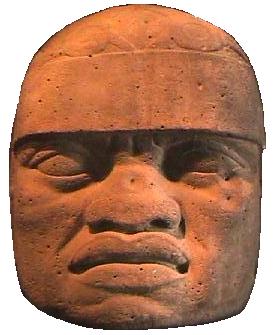
The Multicultural Olmecs .
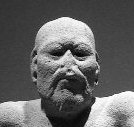
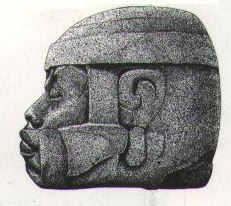
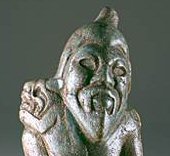
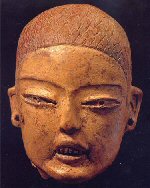
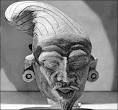
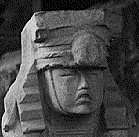
At present, one of the most hotly debated subjects is
that of the Olmecs. They appeared on the Yucatan Peninsula c. 2,500 BC, at
the same time as the Caral-supe culture began in
Peru, both began building pyramid complexes at around the same time, but the
Olmecs were different in another way, as their art is the art of realism,
and within it we can see the clear traces of a multi-cultural society.
One of the most
intriguing aspects of the Olmecs is their
lifelike portrayal of different racial types
in their art. From the earliest discoveries
of the huge carved-stone 'African' heads, to
the extraordinary similarity to the Chinese
Shang culture in art and text, the Olmecs
appear to have been influenced by several
racial types, making them possibly one of the
earliest true multi-cultural societies in
the Americas. There has been much debate
over this issue, although the
evidence is in favour of the probability of
contact with old-world cultures from both
the Pacific and the Atlantic, it is yet to
be officially accepted by academia. It is
perhaps no coincidence that the Gulf of
Mexico is the narrowest continental separation between
the two oceans.
Of great interest in relation to this subject,
is the matter of the famous 'Long-Count'
calendar system, the first record of which has
been found in an Olmec setting near La Venta.
The start date of the Long-count is 3114 BC, the
exact same time that writing simultaneously
began in the Old World in the Indus Valley,
Sumerian and Egyptian and Chinese Cultures. It
is also the period of exhaustive megalithic
construction along western Europe, suggesting
that there is more to be revealed about this era
than is currently known.
(More about
the Olmecs)
Construction Similarities between Old-World
America and South East East Asia/ Polynesian Islands.
It has been observed that there are several
similarities between the prominent temple structures of the Old
World Americas, and those of the Asian/Pacific Islanders, as the
following images demonstrate:
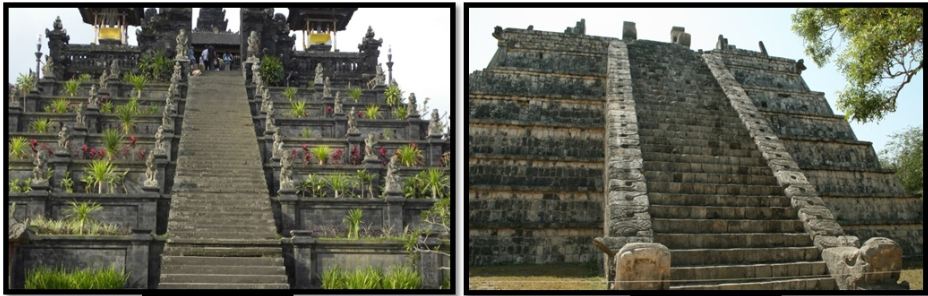
(Left) The
Mother Temple of Besakih, or Pura Besakih, in Bali, Indonesia.
(Right) The Mayan 'Ossuary' at Chichen Itza, Mexico.
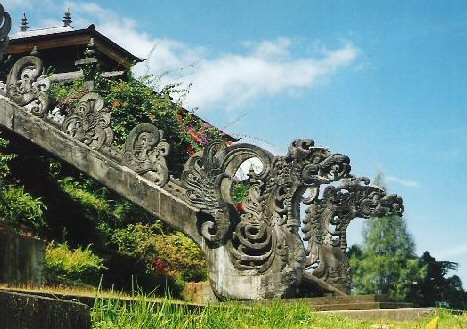
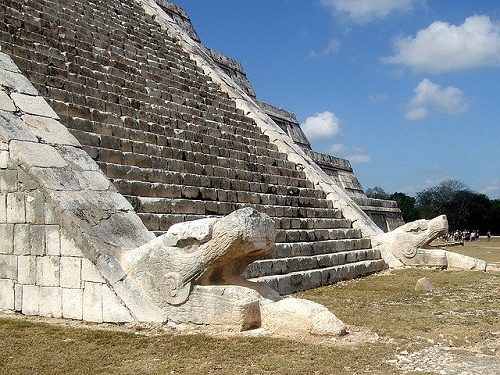
(Left) The
top of the Besakih temple, (Right) The Serpent Stairwell,
Chichen, Mexico (shadow-play transforms them into two undulating
serpents each 21st June)
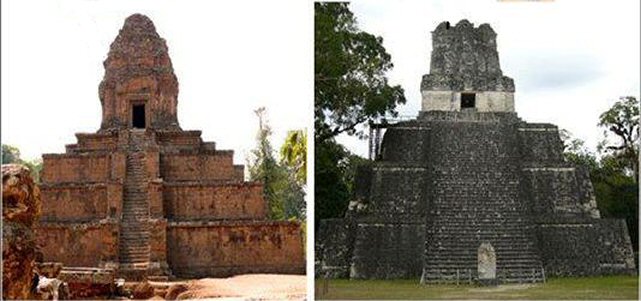
(Left) Cambodia,
(Right), Guatemala.
(South
American Pyramids)
|
Jade Veneration.
Van Sertima mentions the use of green stones being
placed in the mouths of the dead. This particular ritual is seen as far
back as far as the Aurignacian stage of Cro-Magnon in several locations around the world. He said
of it:
'One other burial practice common to ancient
Egypt and Mexico is worth mentioning, if only for the sake of showing how
carefully we must apply our test in the study of cultural similarities. this
burial ritual involved the placing of a green stone in the mouth of the
corpse. Both the Egyptians and the Mexicans saw this green stone as a symbol
of the heart and a prolonger of life. The Egyptians, among whom it took the
form of a green scarab, addressed it thus: "My heart, my mother - my heart
whereby i came into being". The Mexicans placed the Chalchuitl (green amulet)
between the lips of the deceased, and they also associated it with
life-restorative properties. In fact, they called it the "principle of life".
The green stone in the mouth of the dead, however, is a very primitive ritual
indeed - one may even say primordial. It precedes Egyptian civilisation by
thousands of years . It was found between the teeth of the Cro-Magnon
skeletons in the Grimaldi caves near Menton'.
(More
about the Olmecs)
'The very ancient Chinese also placed green
jade amulets in the mouth to preserve the body from decay. Pearls and shells,
as mouth amulets of the dead, were substituted for jade; pearls for feudal
lords, jade reserved for stuffing the mouths of dead emperors. Since we find
such a custom in vogue even as far back as the Aurignacian stage of Cro-Magnon
culture, it might well have travelled from Asia to America in the glacial
epoch, when the very first Americans crossed over to this continent on the
bridge of ice in their two major migrations, now calculated to be forty
thousand years and twenty-five thousand years ago'. (6)
(Prehistoric
China)
|
It can now be reasonably argued that
the accumulative presence of so many
specific old-world and new-world similarities between
cultures, makes it more statistically probable that
contact occurred rather than that it didn't.
(Evidence for
Pre-Columbian
Contact Between the Old-World and New-World Cultures)
Several well known 'myths' (Such as Troy or the Cretan palace of
knossos) have now been determined to have had a factual basis. Others
however, have roots that extends deeper into our past and the substance of their
origin is still questioned. These 'universal' myths share archetypal characters
and sets of ideas which trace back to before the written word and are a vital
source of prehistoric knowledge.
The Flood Myth.
The most commonly known of these
universal myths is that of the 'Great Flood', with over a hundred separate
versions recorded around the ancient world. The tendency for people to
colonise coastal areas makes the periods of sea-level change following the
last great Ice-age the most probable candidate for this origin of this
myth at around 10,500 - 5,000 BC.
The Day the Sun
stood Still.
Again, from unrelated
cultures, there exists a myth of a time when the sun stood still in the
sky. Incredibly, the same myth is reported from the other side of the
world where the moon was said to have stood still. This apparently
impossible set of myths has yet to be satisfactorily explained.
Precession of the Equinoxes. One of the most interesting aspects of
mythology is the re-occurrence of specific numbers related to precession.
It is suggested that these figures were placed into myths in order to
preserve them (such as Manetho's Egyptian king-list, for example). There has been much excellent work on
this subject in recent times. The book 'Hamlet's Mill'
by Santillana and Von Dechend, is still by far the fore-runner in this
field of study, concerning the 'Origins of human knowledge and
its transmission through myth'
(1).
(Recommended Reading).
Cross-Cultural Icons:
Certain similar icons exists in the
ruins of the world�s most ancient
cultures. The Following is one that
is now recognised to have
extraordinary parallels around the
ancient world suggesting the
presence of a prehistoric culture
with a world-wide presence.
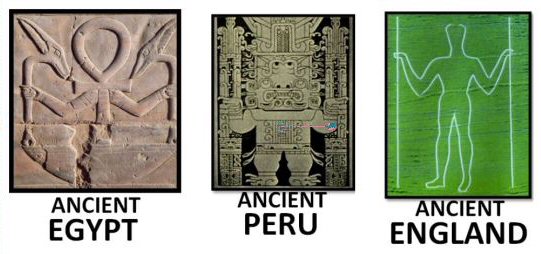
With both arms outstretched in
opposite directions (right and left)
a single god or goddess holds �twin
objects� in each hand,
symmetrically.
(Read
Full Article Here)
(More about Cross-cultural Mythologies)
|
Prehistoric Construction Techniques:
There are several very specific
construction features that can be seen in ancient constructions around
the globe. From the method of cutting stone to the means of joining it,
to the design of the constructions themselves - there are just too many similarities
to ignore the idea that there may have been contact between some of
these previously considered 'unrelated' civilisations.
The following pictures illustrate that the same
specific construction techniques were being used on both sides of the
Atlantic before the 'official' discovery of the Americas occurred.
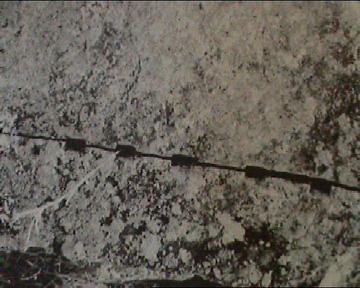
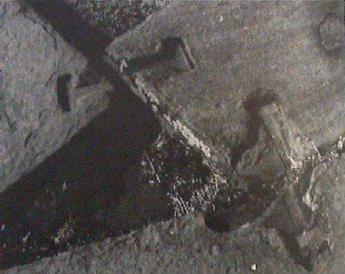
The fact that stone was split with the
same technique throughout the ancient world, is not surprising as it is
the most effective method and probably originates from long in the past.
The use of metal 'ties' to hold stones together, however is a specialised
technique which is also found in ancient structures on both sides of the
Atlantic.
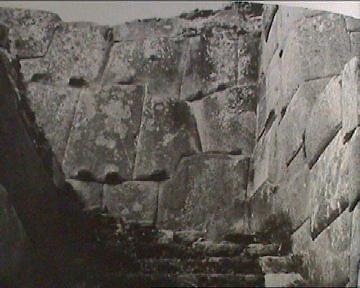
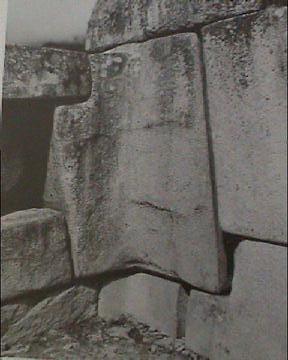
The 'protruberances' found on the stones
of many south American structures (left) are also found in Egypt at Ghiza
and Abydoss in Egypt, as is
the art of 'folding' stones around corners (right).
(Prehistoric Construction
Techniques) |
|
Evidence for Prehistoric 'International' Trade: |
We know that a substantial amount of
international trade operated, even in prehistoric times. Both metal and certain
types of stone were valuable commodities which can be shown to have been mined
and moved
around the world, presumably in trade. The following examples only scratch the
surface of a fascinating subject, worthy of extensive future research.
Prehistoric Mining:
Evidence of mining around the ancient world reveals
the presence of an organised infrastructure including a specialised
labour force supported by a supply of tools, food, clothes, housing etc
and followed by a distribution system, most likely involving trade. The
following examples not only show how long this activity has occurred but
also how extensive it was.
Richard Ridgley makes
note of the Castelmerle Valley in the Dordogne, which was the
commercial heart of the region in Palaeolithic times. Archaeology has now
uncovered what appears to be a large-scale bead making factory using woolly
mammoth ivory from Czechoslavakia and soapstone from even further east existing
at c. 35,000 BC. The tens of thousands of beads were processed and even woven into clothing,
with separate areas showing specialised "factories" each doing
just
one part of the process. It is believed that the standard 6mm beads were
produced by women. Similar beads have been found as far away as Russia.
(10)
(More
about Prehistoric Mining)
Egyptian Finds in Prehistoric Britain:
Faience is a glass-like
material, made by heating a paste consisting of sand or
crushed quartz, an alkali such as plant ash, and a glaze,
until vitrification occurs. The result is an opaque, brittle
material. The turquoise colour of British faience results
from using a copper-based colourant for the glaze.
Faience technology was
developed in Mesopotamia and Egypt during the 5th or early
4th millennium BC, and its use spread out far and wide over
the course of the next two millennia. Thanks to a set of
faience-associated radiocarbon dates, some recently obtained
at Groningen University in the Netherlands from cremated
human bone from Britain and Ireland, we can now confirm that
it was being used in this country by the 19th century
BC-much earlier than people used to think-and that it
continued to be used until around 1500 BC. The know-how to
make it did indeed come ultimately from the Near East, but
certainly not via Egyptian or Mycenaean traders bringing
bags of trinkets for the natives in the 14th century.
The picture that is now
emerging is much more plausible, and more interesting, than
this far-fetched hypothesis. It now seems that people in
Britain found out about faience through links with central
Europe in the early 2nd millennium BC. These links arose
largely from the demand for tin from south-west England for
the central European bronze industry, and it seems that the
Wessex 'barrow boys' were able to control and benefit from
this tin 'trade'.
Faience beads of segmented
and other shapes were already being made in central and
east-central Europe at this time. The technique had been
learned from eastern Mediterranean faience makers, thanks to
a network of contacts stretching across south-east Europe.
It seems that the know-how for making faience was one of the
exotic luxuries that arrived in Britain as a result of this
extensive networking.
There is independent
support for the idea that the appearance of faience in
Britain and Ireland was indeed related to the tin trade.
First, a composite necklace found in a bog at Exloo in the
Netherlands contained beads made out of tin, together with
others of faience and amber and one made of old, recycled
tubular sheet bronze. Some of the tin beads are shaped like
segmented faience beads. These echo the famous but lost
segmented tin bead from Sutton Veny in Wiltshire that the
antiquary Richard Colt Hoare illustrated in 1812.
http://www.britarch.ac.uk/BA/ba70/feat3.shtml
|
Article: ScienceDaily, (Dec.
15, 2008)
A
4,000-year-old amber necklace has been unearthed in England. The
rare find was unearthed from a stone-lined grave � known as a
Cist - excavated by the team from The University of Manchester
Field Archaeology Centre and Mellor Archaeological Trust.
It is the first time a
necklace of this kind from the early Bronze Age has been found in
north west England.
�The fact that it has been found
in the north west of England is pretty amazing and extremely
rare.�
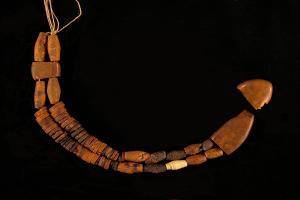 Dozens of different sized
pierced amber beads are linked together on a length of fibre to
form the beautiful artefact. It was discovered by Vicky Nash from
of the Mellor Archaeological Trust. Dozens of different sized
pierced amber beads are linked together on a length of fibre to
form the beautiful artefact. It was discovered by Vicky Nash from
of the Mellor Archaeological Trust.
Peter Noble, who directed the
dig added: �The necklace was made of amber � which is not found in
this region. In fact, the nearest source is
in the Baltic so we�re bound to ask, how did it get here and who
brought it?�
(Ref:
http://www.sciencedaily.com)
|
Copper 'Oxhide' Ingots : Mycenaean currency.
In 1896, in Cyprus, Crete and
several other Mediterranean
excavations, corresponding 'Mycenaean'
copper objects, now realised as ingots have also been found,
indicating evidence of a recognised international trading system. Complete or partial oxhide ingots
have also been discovered in Sardinia, Crete, Cyprus, Cannatello
in Sicily, Boğak�zy in Turkey
(ancient Hattusa, the Hittite capital), Qantir-Piramesse in Egypt,
and Sozopol in Bulgaria. Archaeologists have recovered many oxhide
ingots from two shipwrecks off the coast of Turkey (one off
Uluburun and one in Cape Gelidonya).
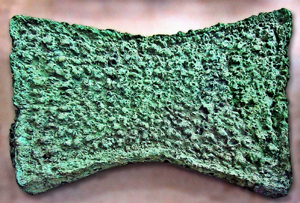 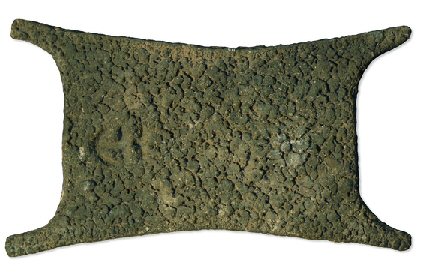
Copper ingot from Crete (Left), and a British
Museum Ingot from the 'Foundry Hoard' at Enkomi, Cyprus
c. 1225-1150 BC (Right).
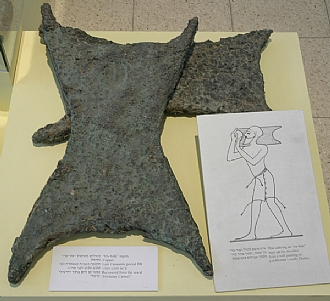
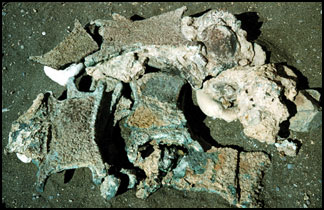
From shipwrecks at Hishulay Carmel, Israel c.1300
BC (Left), and Uru-Burun, Turkey, (Right)
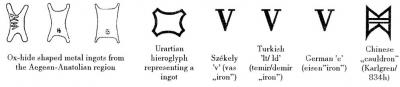
It has been suggested that the generic ox-hide shape of the ingots
was transferred into syllabic form.
It is also claimed that several American sites have yielded
considerable numbers of copper ingots also shaped like the hide of an animal;
named 'Reels' (8), suggesting contact between the 'Old' world and the
'New' (3)(4).
Copper ingots of "ox-hide" shape have been
found on both sides of the Atlantic, proving that around 200
B.C. there was a revival of the regular Atlantic trade
between the Mediterranean and North America. This involved
copper from Wisconsin, set down the Mississippi River and
out to Europe. Bruce J. Trigger reveals that there were also
Adena sites in Maryland -- suggesting traffic up the Potomac
and Monongahela rivers from the Atlantic into the American
interior (Handbook of North American Indians, p. 29).
(More
about Mining in Prehistory)
|
European Passage-Mounds: Constructional similarities.
The development of several significant passage-mounds along
the Western Atlantic coast of Europe in itself is nothing special, but there are
several specific features of passage-mounds themselves which appear to show a
common cultural 'fingerprint', for example:
The passage mounds of the
Boyne Valley, Maes Howe,
Gavr'inis, Bryn
Celli Ddu (and possibly Zambujeiro in
Portugal and the 'Temples' on Malta), are all
contemporary with a 'shift' in thinking in prehistoric Europe c. 3,300 - 3,100
BC, at which time large, civil-scale constructions begin to appear across
western Europe, and other older monuments are demolished and re-used, such as at
Lochmariaquer, France.
The passage-mounds of Gavr'inis, Maes Howe and Newgrange are
all orientated in the same direction - along the path of the mid-winter solstice
sun. Other passage mounds are invariably orientated to either significant
positions in the solar or lunar cycles.
Sir N. Lockyer was the
first to record the intrinsic similarities between the European
megaliths and the Egyptian temples. Both of which share a
preference for astronomical orientation, and both of which have
passages in them to record significant moments of the calendar.
Light-boxes:
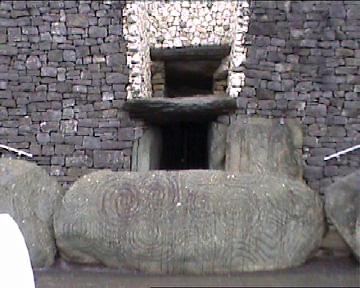 A construction feature found only in
European passage mounds, (Newgrange,
Maes Howe,
Carrowkeel, and Bryn Celli Ddu). At all of these passage mounds, the
constructions included a means of 'catching' the light of the sun/moon at
specific times of the year. They can be viewed as huge celestial chronometers.
In the case of the Boyne Valley Complex,
the three passage mounds of Newgrange,
Knowth and Dowth
combine to record numerous significant solar and lunar events. At Newgrange, the
light is restricted through the inclusion of the 'light-box' (right), an
undulating corridor, and a raised internal chamber, resulting in the small
dagger of light that slides along the corridor into the chamber at the winter
solstice. A construction feature found only in
European passage mounds, (Newgrange,
Maes Howe,
Carrowkeel, and Bryn Celli Ddu). At all of these passage mounds, the
constructions included a means of 'catching' the light of the sun/moon at
specific times of the year. They can be viewed as huge celestial chronometers.
In the case of the Boyne Valley Complex,
the three passage mounds of Newgrange,
Knowth and Dowth
combine to record numerous significant solar and lunar events. At Newgrange, the
light is restricted through the inclusion of the 'light-box' (right), an
undulating corridor, and a raised internal chamber, resulting in the small
dagger of light that slides along the corridor into the chamber at the winter
solstice.
(More about Light-boxes)
Cruciform Chambers and 'Libation' Bowls:
Several of the largest passage mounds, as well as
having a passage orientated towards an astronomically significant moment of the
year, also have cruciform chambers and large, shallow stone-cut bowls.
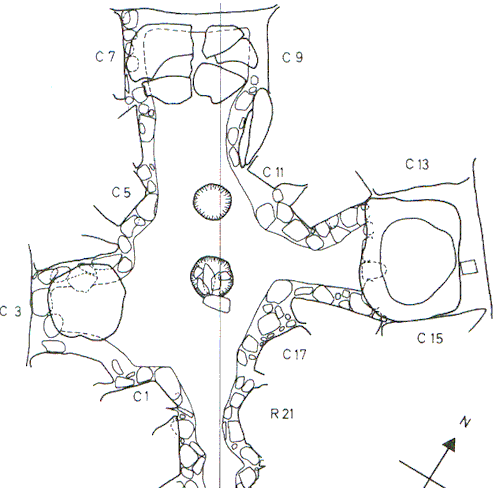
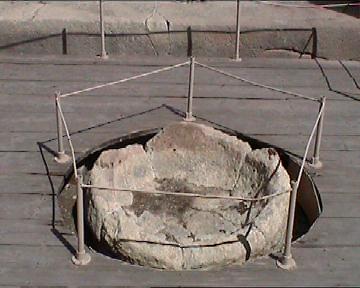
Newgrange
(left), with three Libation bowls, and the
Tarxien, Malta (right).
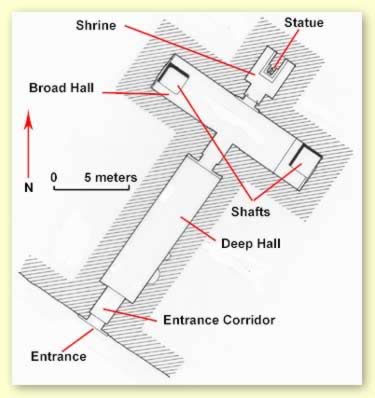
Egyptian Cruciform Chambers.
The
tomb of Ahmoset (left); 'Fanbearer on the King's Right Hand',
'Steward of the Estate of Akhetaten' and 'Royal Scribe' at
Akhetaten' during the Amarna Period, was also cruciform in
shape. It is interesting to note that here too a bowl was present.
'The shrine opening from the very back of the
broad hall on the center axis of the tomb was undecorated, though a
seated statue of the tomb owner was cared at is back. However, this
is now badly mutilated. A libation basin was also cut into the floor in
front of the statue'.
(Passage-Mounds
Homepage)
(European Megalithic
Complexes)
|
|
Egyptian - Sumerian - Indus Valley Seals: |
The earliest seals
found were used in Iran at 5,000 B.C. Archaeologists can use both the trade in seals themselves,
as well as the distances between seals and the corresponding sealings, to trace long-distance trade networks. One such
set of seals were manufactured around 1,900 B.C. on two
important island trading cities in the Persian Gulf --
Bahrein and Failaka. These seals were traded all over the
Middle East, and have been found at diverse and distant
locations such as Susa in Iran, Bactria in Afghanistan, Ur
in Iraq, and Lothal on the west coast of India. By 1,750
B.C. Common Style seals are found in locations ranging from
Spain, to Mycenaean Greece, to Marlik near the shores of the
Caspian Sea. These seals were made from faience, a less
expensive material, and used by smaller merchants. [2]
The
first cylinder seals belonged to the
now long dead civilization of the Sumerians,
the inhabitants of Nippur, Lagash, and other cities on the
Euphrates and Tigris rivers in what is now Iraq. They spoke
a strange language -- neither Semitic nor Indo-European, the
family of languages spoken by many later civilizations and
the most current inhabitants of the Middle East. Sumerian
was an tongue, bearing resemblance to such
diverse languages as Turkish, Finnish,
Japanese, and Dravidian. Indeed, it was probably some
version of the latter tongue that was spoken by their
neighbours, the early inhabitants of the Indus river valley.
These Indus valley people developed, soon after the
Sumerians, their own civilization and unique style of seals.
Modern speakers of Dravidian languages are scattered all
over the Indian subcontinent, including remnants in
Afghanistan and a large number of Tamils in southern India.
'The discovery
in Egypt of cylinder seals similar in shape to those used in
Sumer attests to contact between the two areas toward the
end of the fourth millennium B.C. Certain early Egyptian art
motifs and architectural forms are also thought to be of
Sumerian origin. And it is probable that the example of
Sumerian writing stimulated the Egyptians to develop a
script of their own'
(7).
Seal impressions have been found in the ancient city of Harrapan, in the Indus River valley (modern Pakistan), that
had been made by seals found in Lagash in Sumeria (modern
Iraq). From 3,600 B.C. in Sumer, and a little later in the
Indus Valley, we can find seals made out of a rare
high-quality stone, lapis lazuli. These stones could only
have originated from rather distant and inaccessible mines
in Afghanistan.
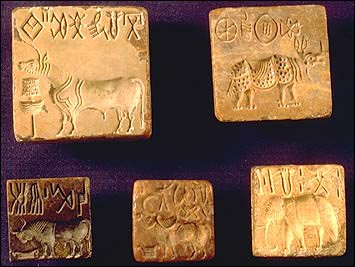
The first
objects unearthed from Harappa and
Mohenjo-Daro were small
stone seals inscribed with elegant depictions of animals,
including unicorn-like figures, and marked
with Indus script writing which still baffles scholars.
These seals are dated back to 2,500 B. C. Source: North Park
University, Chicago, Illinois.
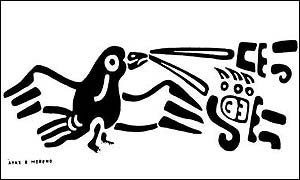
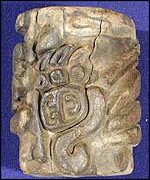
This cylinder
seal was found in an Olmec context. It is suggested to spell the
name of a king or a date. (3, Ajaw)
(More about the Olmecs)
|
The
Gilgamesh Connection:
It was long suspected that there was a connection between the early
dynastic Egyptians and the Sumerians. The Knife found at the Royal cemetery in
Abydoss (right), with its depiction of Gilgamesh, is proof enough, but the
following information suggests that the cultural link may have been
stronger than once thought.
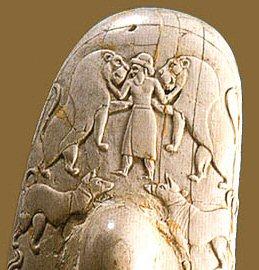 The pre-dynastic
Pharaohs of Egypt had close
connections with Sumeria as established by the discovery of the Gebel Arak knife
in one of the Abydoss pre-dynastic royal tombs. The figure on the knife is of
the Sumerian Hero/King Gilgamesh, and it shows him in his typical stance between
two lions (Right). The pre-dynastic
Pharaohs of Egypt had close
connections with Sumeria as established by the discovery of the Gebel Arak knife
in one of the Abydoss pre-dynastic royal tombs. The figure on the knife is of
the Sumerian Hero/King Gilgamesh, and it shows him in his typical stance between
two lions (Right).
Egyptian hieroglyphs
are a slightly modified conventional form of the Sumerian
diagrammatic picture-writing which came into use during
the rule of Menes and the 1st dynasty pharaohs;
they have the same phonetic values as their parent
picture-signs in the Sumerian[5].
Menes (Manj of Egyptian legend) (Manis of Mesopotamia)
(Min or Minos of Greek legend) erected Egypt into an
independent kingdom and preserved its independence within
the Mesopotamian empire when he succeeded to the throne
after his father's death; Menes was the prince of Sumeria
and governor of the Sumerian Indus Valley. Menes annexed
and civilized Crete and extended his rule to the Pillars
of Hercules and Britain.
Menes was the son of Sargon (who had a Queen named Lady
Ash), or "Sargon the Great"[5] of
ancient Mesopotamia and Menes and his dynasty referred to
themselves as "Gut" (Goth) (in Indus Valley seals) and
"Bar" or "Par" (Pharaoh) (as referred to in Egyptian
records).
Menes' Egyptian inscriptions were written in Sumerian
script (not the later conventionalized hieroglyphs) and
deciphered to match Menes' Mesopotamian and Elam records
as well as his official seals in the Indus Valley (where
he was a Sumerian governor there until he revolted against
his father (Sargon) and annexed Egypt).
Menes had a son named Narmar or Naram (Naram Enzu) whom he
sent to the Indus colony of Edin as a viceroy.
These early
references to Sumerian and Egyptian communication also
supports the records of a mass immigration of people
called the 'Shepherd Folk' into Egypt from the East at
around the same time as the decline of the Sumerian Empire
and the simultaneous rise of the Egyptian Dynasties.
(More on this
subject)
The Gilgamesh Figure.
Of great interest is the appearance of the
Gilgamesh figure in one of the Indus Valley seals (Below, left). The 'Gilgamesh'
figure is an iconic Sumerian image, found in other
prehistoric civilisations such as Early Dynastic Egypt and the Indus Valley. Curiously
enough, the same figure, but with a woman between the felines is found at
other prehistoric locations such as Malta, Turkey and Mycenae.
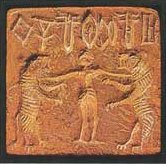
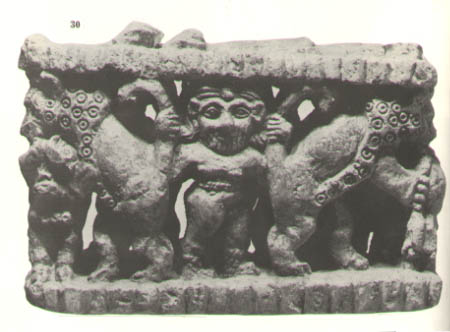
From Left to Right (Mohenjo Daro, Indus Valley.
Abydoss, Egypt and Sumeria).
(All dating from the 3rd Millennium BC).
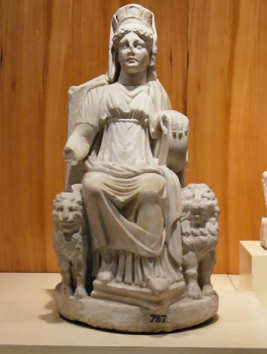
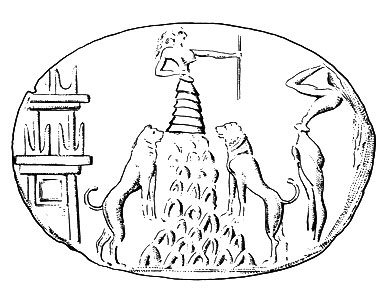 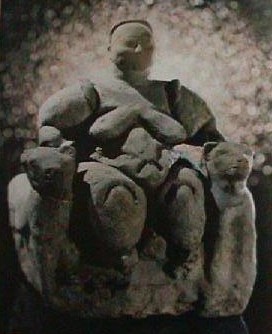
If one travels further into Anatolian prehistory to
Catal hoyuk (8,000 B.C) for example, we can
also compare the figurine of a large female sitting upon a throne flanked by
either Lions or leopards. The Prehistoric Earth Goddess or Cybele is also often depicted enthroned with lion/s
as is the Minoan mountain goddess (centre).
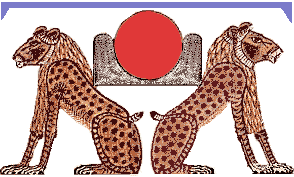
It is perhaps interesting to note, in relation to the prehistoric images of
an Earth-Mother-Goddess with Lions on either side, that the Egyptians used the
symbol of two lions 'Aker' to represent the horizon. In this context, we can see
through these earlier iconic images of a female Earth-Mother-Goddess flanked by
felines, a depiction of the literal Earth itself.
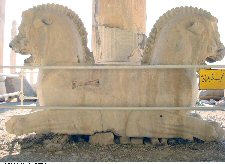
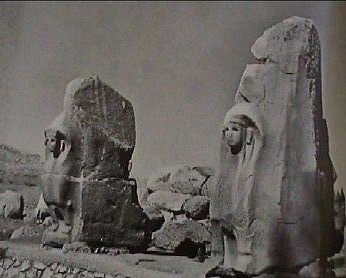
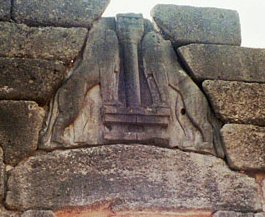
The same symbols were later used as 'guardians' of important cities, temples
etc.
(From left to right - Persepolis, Alaya Huyuk,
Mycenae)
|
And Finally...
Old-World Images of Maize
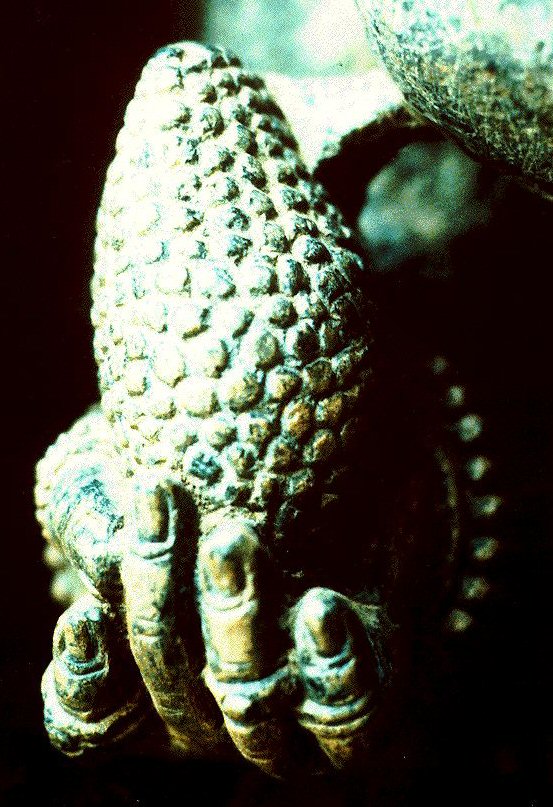
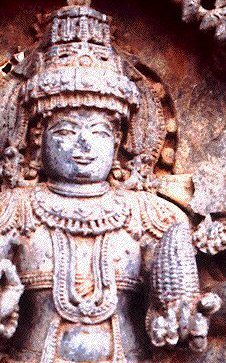
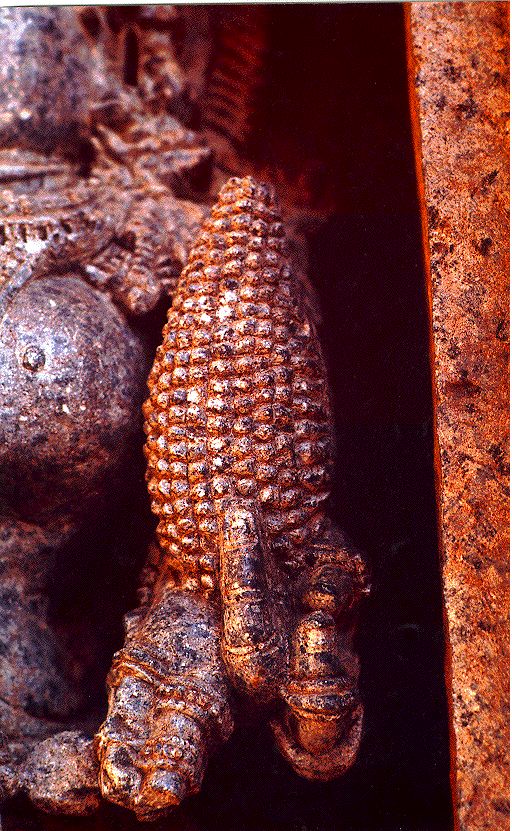
Images of what appears to be 'Maize' or 'Corn' from
ancient India.
Article: March, 2008:
Birbal Sahni Institute of Palaobotany.
'Investigation of botanical remains from an ancient site, Tokwa
in Uttar Pradesh, has brought to light the agriculture- based
subsistence economy during the Neolithic culture (3rd-2nd
millennium BC). An important find among the botanical remains is
the seeds of South American custard apple, regarded to have been
introduced by the Portuguese in the 16th century. The remains of
custard apple as fruit coat and seeds have also been recorded
from other sites in the Indian archaeological context, during
the Kushana Period (AD 100-300) in Punjab and Early Iron Age
(1300-700 BC). The factual remains of custard apple, along with
other stray finds discussed in the text, favour a group of
specialists, supporting with diverse arguments, the reasoning of
Asian - American contacts, before the discovery of America by
Columbus in 1498'.
(Link
to Article)
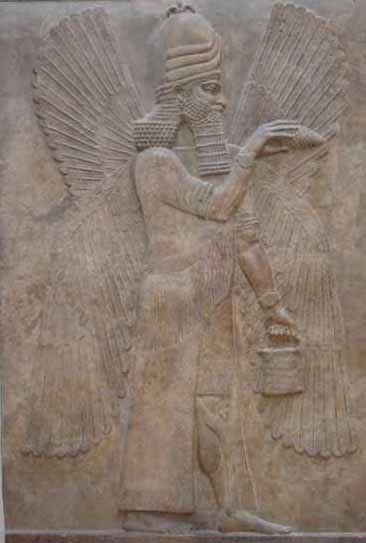

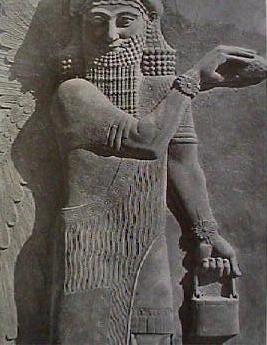
Several are also found in Mesopotamian
art.
(Old-world
- New-world Contact)
(Cherchen
Man - China)
(Prehistoric
Mining)
(Mythology
Homepage)
|