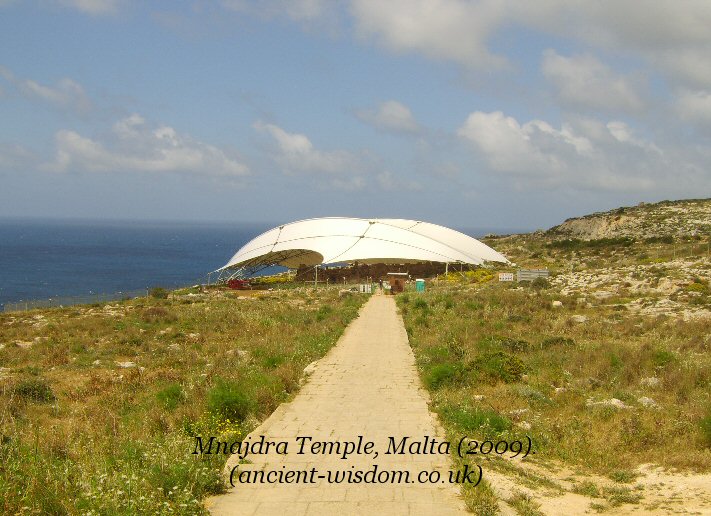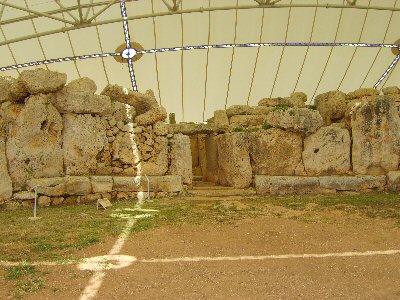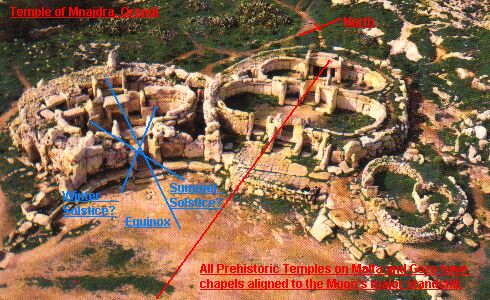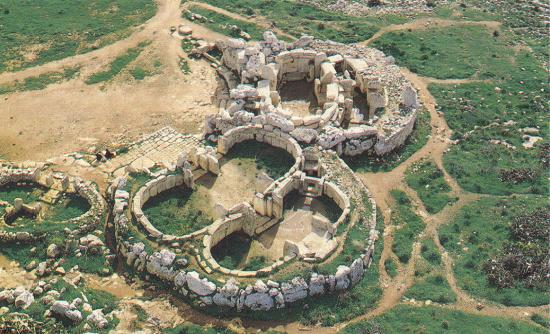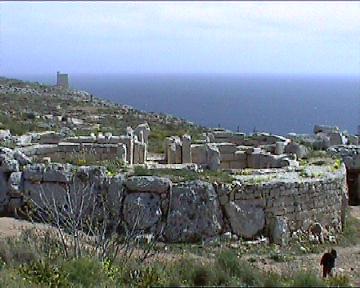
Mnajdra before it was covered, the temples were connected with the landscape,
with the sea, sky and its partner temple visible on the horizon. Although
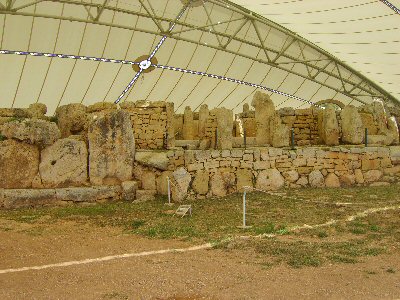
a great deal of this temple
has been restored and replicated, the larger stones
are still original.
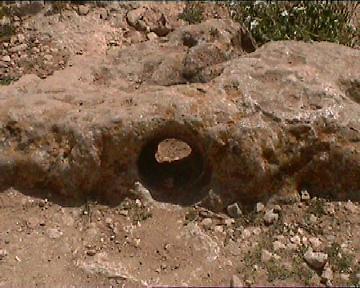
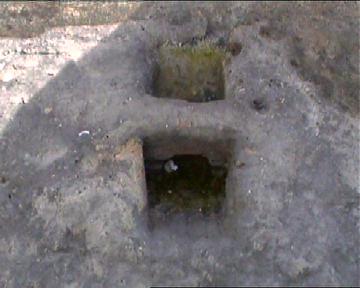
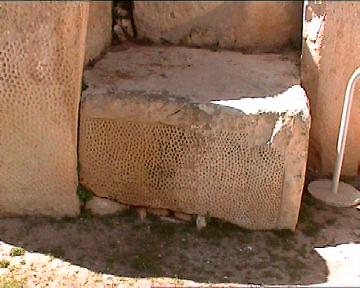
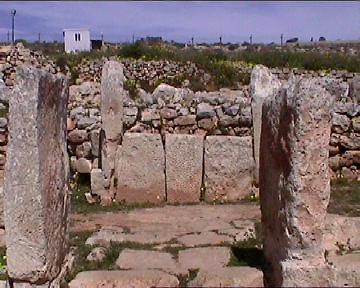
The standard 'Hitching-point' at the entrances of most
Maltese temples. The same features were also used to hold the internal doors
of the temples, and perhaps more importantly, as boat moorings. The photo
(left) is from the ground in front on Mnajdra, while that on the right is
from St Georges bay, the site of several other important Neolithic remains.
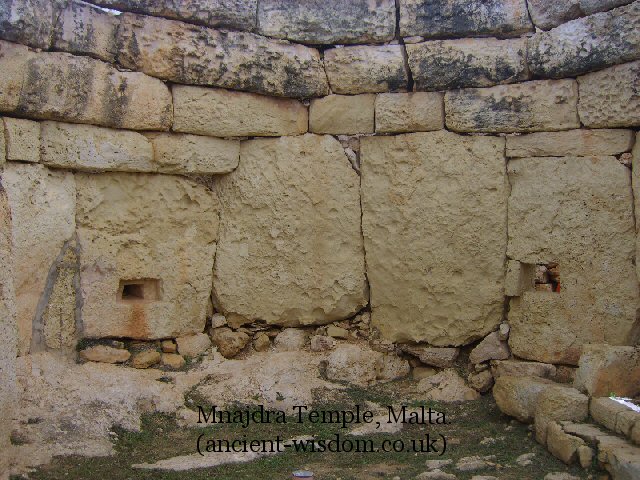
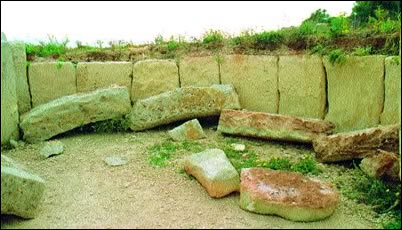
Classic temple walls, curved inwards, as at
Hal Tarxien. It is
proposed that the temples were originally completely covered over with
roofs, an idea supported by inwards curve of the walls and the following
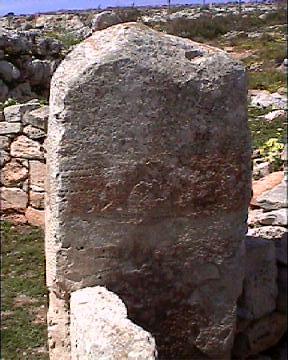
engraving, also from Mnajdra.
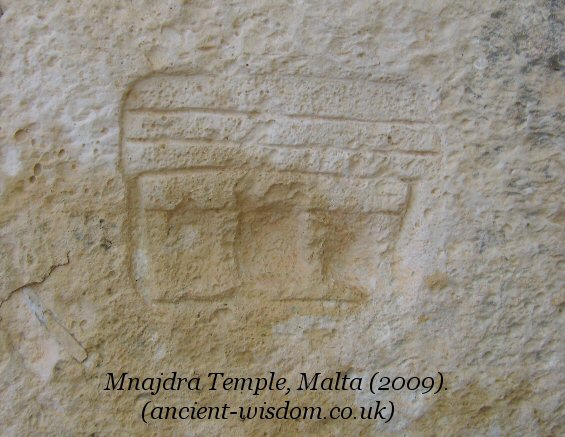
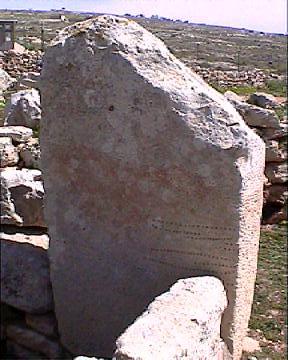
This engraving from the upper temple corridor
wall is of a temple facade. The style is similar to that of other model
temples found at Hal-Tarxien and
Skorba.
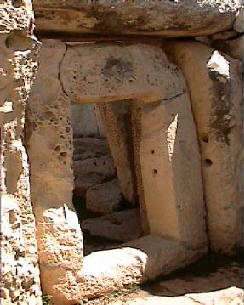
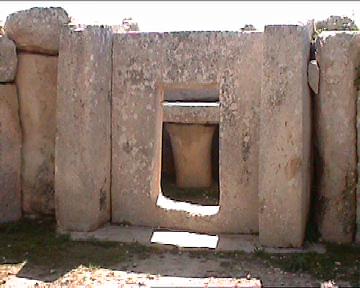
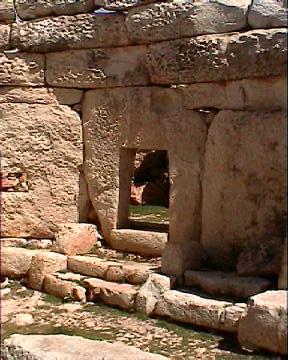
The temple has some of the best examples of 'Stone-cut
doors'.
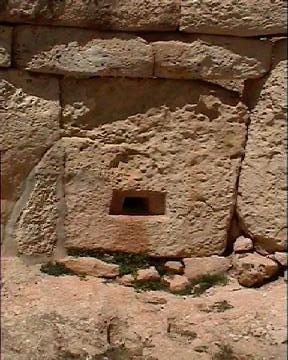
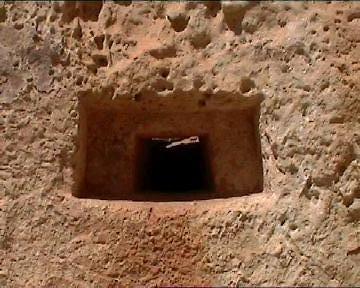
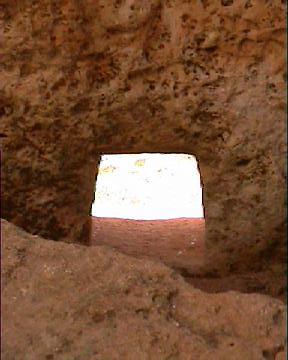
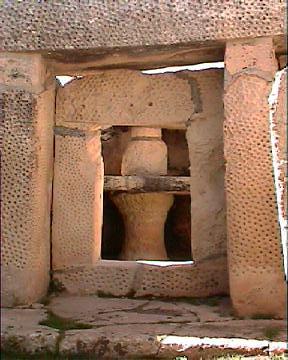
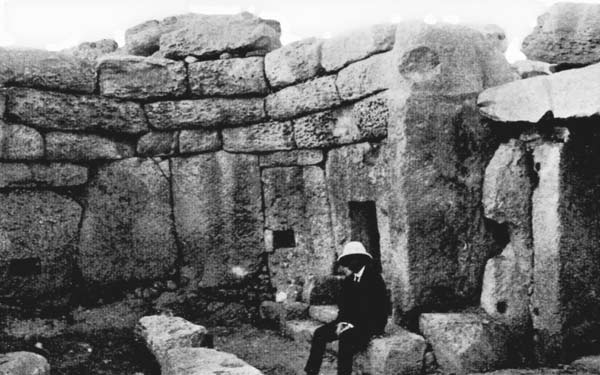
Plus this beautifully carved 'oracle hole' in the wall -
(Note the presence of natural gaps between the stones of the wall - photo
left). The hole is carved so that on the side which 'receives' the blocking
stone the hole is smaller, less prominent and lower down
to the floor.

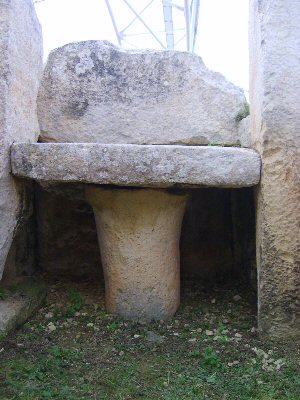
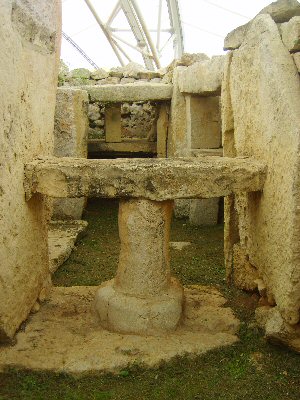
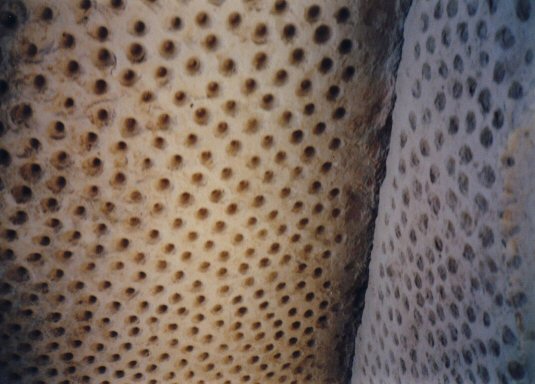
These stone features, commonly called
'mushroom' alters, etc.. are more likely to be structural supports.
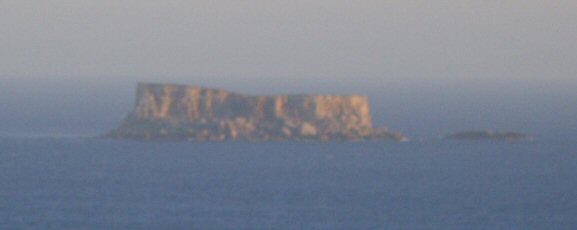
The view of Filfla Island from Mnajdra (and
Hagar Qim).
Hancock also
makes reference to 'Father Emmanuel Magri, the first official excavator of
the Hypogeum at Hal Safleni', who 'recorded the presence, up until the
end of the nineteenth century of cart-ruts on the tiny uninhabited island of
Filfla', a small island about 5 km south of Mnajdra and
Hagar Qim
temples. He then adds that in 1912, R. N. bradley commented on cart ruts
near Hagar Qim - noting that they ran "over the precipitous edge of the
cliff towards Filfla" (2).
The
conclusion of this information is that cart-ruts once ran all the way from
Hagar Qim to Filfla across a land bridge, which has collapsed since humans
first came to the island.

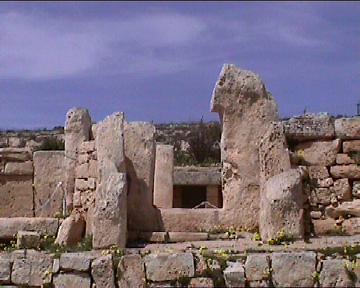
 Mnajdra: