For a long time it
was believed that the Zodiac signs originated in Babylon. This assertion is now being
challenged by 5,000 - 7,000 year old discoveries in Anatolia, which suggest the heavens
were divided at least a thousand years before the Sumerians, Egyptians or Indus Valley
cultures existed.
|
Animals are well
known for their extraordinary senses through their migratory skills, earthquake and
weather prediction, but what of the humans who evolved alongside them.? Our physiology
suggests that we were once similarly equipped.
|
Research is showing
that sound can be used in a variety of ways to assist patients recovery, from depression
to healing broken bones. Recent studies at Stonehenge suggest that the art may have been
practiced for much longer than we thought.
|
Reports of ancient
canal systems in the Americas has prompted debate on their origin. From Peru to
Louisiana to Florida, evidence of canal systems dated at 7,000 BP, and including
submerged Harbours and Quays are revealing the existence a new form of engineering in
the ancient Americas.
|
Well, here we are in
2012, the so-called 'End-time', of Mayan prophecy. As the inevitable
hype and speculation increases, perhaps we should be asking ourselves what exactly it is
that we are afraid of.
|
The relationship
between human consciousness and the landscape is exposed through the creation of
landscape zodiacs, something still operating in eastern cultures such as the Buddhists
and Hindus.
|
The numerous
discoveries of bone flutes suggests an intimate relationship with music from our
earliest origins. They are found around the prehistoric world, often with the same
diatomic scale we use today.
|
According to Jung,
trees are a symbolic reference to the self. Regardless of any metaphysical connections,
we depend on trees for our survival, but what more we can learn from them.
|
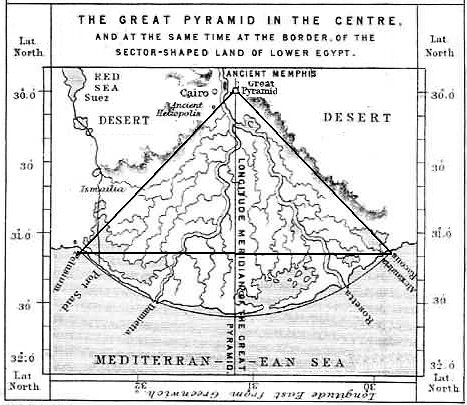
Recent discoveries
have revealed the thread of an ancient set of ideas that symbolically unites pyramids
with the underworld, the deluge, the primal-mound, and our developing ideas of the
afterlife and cosmology.
|
the discovery of
several bodies what appear to be 'therapeutic' marks on them, and relating to
illnesses they carried while they were alive, has opened the debate as to the origin of
both acupuncture and Tattooing.
|
Musical ratios have been observed in
the movements of the planets, they have been recognised in important texts such as the
Vedas or the Book of the Dead, and in constructions and myths around the ancient
world.
|
With over 400 ancient
lenses discovered so far, it is perhaps no coincidence that Babylonian texts refer
specifically and accurately to celestial objects and details that are not available with
the naked eye.
|
The 'Orion
theory' has gradually gained weight and indeed is now considered valid in the UK,
where several Triple Henge-Circles have been identified as having a relationship with
Orion
|
The symbol for the
Labyrinth has been associated with sacred places for thousands of years. More recently,
it has been used as a tool for pilgrimage, representing the metaphorical journey we take
through life.
|
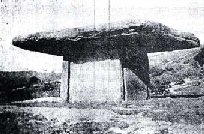
Research is showing
that the Neolithic landscape was carefully shaped and constructed, connecting us both
spiritually and physically to both the cosmos and the afterlife.
|
A look at the
controversial idea of predicting the events in a synchronous universe as famously
proposed by Carl Jung, and practiced throughout history by cultures and religions to
this day.
|
The deliberate and
far more costly selection, transport and use of specific stone types ('pieces of
places') offers an insight into the way stone was viewed in prehistory.
|
The natural acoustic
properties of certain locations appear to have been realised as far back as the
Palaeolithic. In addition, several ancient structures are now recognised to contain
sonic properties in their design.
|
These very specific
design construction features were built into several prominent passage mounds. Their
presence betrays an example of the scientific Neolithic mind, and the mechanism of the
heavens.
|
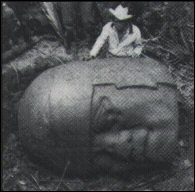
The giant Olmec heads
at La Venta and Vera Cruz are certainly suggestive of a Negroid presence at earliest
stages in Pre-Columbian history. They also betray a curious knowledge of magnetism.
|
Stones with holes in
them - A common construction feature around the ancient world, but what do they mean..?
Why would we put ourselves through the heart of stone.?
|
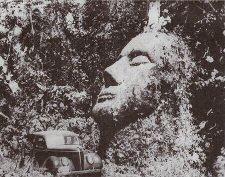
Just how coincidental
are the examples of 'faces' in stones at megalithic sites and what was the
function of such natural anthropomorphic features to the prehistoric builders.
|
It has been suggested that we owe
our imaginative leap to the natural (Psychotropic) products of the earth-mother. This
page explores the role of natural chemicals on the evolution of
imagination.
|
Are we really at the
'Mayan end-time', or does 2012 just mark the end of one cycle and the
beginning of another? A look at the cyclic nature of catastrophe, the absences in the
archaeological record and what we can earn from them.
|
| |